When planning to repair or replace a roof on a commercial building, choosing the right materials for the job is key. For instance, you can pick from several asphaltic roofing products—including atactic polypropylene (APP), styrene butadiene styrene (SBS), and built-up roofing (BUR) membranes—based on which system provides the best solution the building owner and design team is trying to accomplish. Here's why you might choose a SBS roofing system in particular to other asphaltic roof types.
The choice of method often comes down to the building and regional regulations. GAF Senior Product Manager Ben Runyan, points out that "some insurance companies or jurisdictions don't allow open flames," making cold-applied or self-adhered options the preferred solution for those specific jobs.
What Is SBS?
SBS modified bitumen roofing is formed from asphalt and synthetic rubber polymer, styrene butadiene styrene. This rubber polymer composition gives these membranes heightened cold temperature flexibility and exceptional elongation properties, making it an excellent choice for commercial low-slope roofs.
Advantages of SBS Modified Bitumen
SBS membranes have a few advantages.
Flexibility
SBS roofing is more flexible than its other asphaltic counterparts. Synthetic rubber's elastic properties allow the material to expand and contract with the roof during temperature changes, especially in cold weather. This elastic property reduces the chance of cracking and damage to the material, more specifically the reinforcement that is encapsulated inside the membrane ply.
Durability
Since it's so flexible, SBS membranes are able to handle heavy impacts and foot traffic. When environmental elements like snow, hail, or ice land on the roof, SBS-modified bitumen can endure them without incurring damage. Since many commercial roofs have rooftop equipment like HVAC units and satellites, foot traffic from technicians is often expected. The multiply redundance and total thickness of a complete SBS roofing system provides the ability of the roof assembly to handle heavy foot traffic and gives an edge in commercial low-slope roofing applications.
Complementary to Other Roofing Materials
SBS roofs often have two to three layers which make up the total roofing membrane assembly. The first layer to be installed is called the base layer, and the membrane will include a reinforcement layer consisting of fiberglass, polyester or a combination of both sandwiched in between two layers of modified SBS asphalt. This base layer is the membrane foundation and helps connect the asphaltic membranes to the substrate below. Since SBS can work in conjunction with other systems, sometimes the base sheet can instead be BUR ply sheets, while the second sheet, or cap layer could be a SBS modified bitumen membrane. The top layer also known as the cap sheet is the topmost visible layer and can be either granulated or have a surfacing film installed. Typical SBS cap membranes are granulated in appearance.
Resistant to the Elements
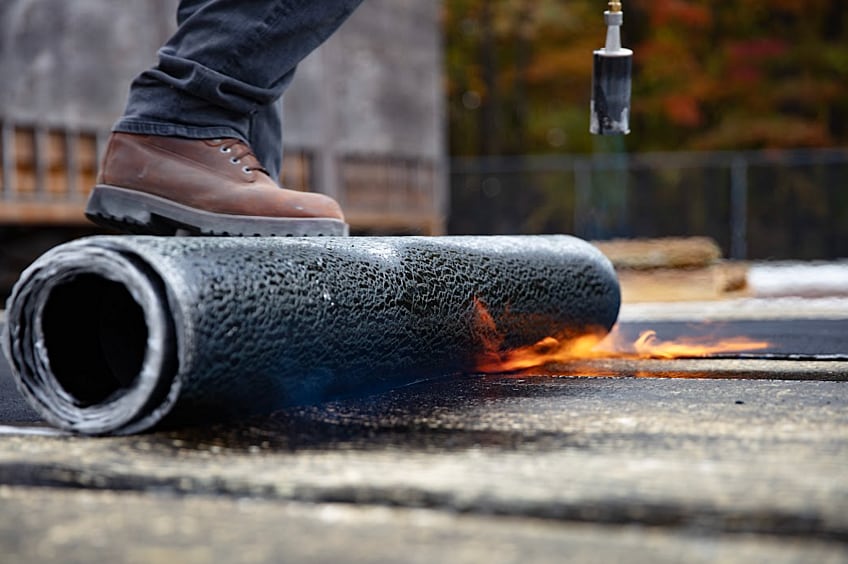
This multilayered structure weatherproofs the roofing system. A layer can act as a backup in case one of the layers fails, making the overall structure more resilient to leaks thanks to the multiply construction and total system functionality. The asphaltic material is impermeable, so it doesn't absorb water which makes it an ideal roofing solution for critical structure waterproofing. SBS membranes are usually installed through heat-welding using an open flame torch, creating a molecular bond connecting the base and cap plies together and securely to the substrate below the membranes. Additional methods of attachment are also possible with asphaltic roofing including; hot-mopped, mechanically fastened, Self-Adhered and cold adhered applications. Rolls are customized based on application type and installation types can be interchanged depending on the project needs and total system requirements.
Some SBS roofing materials like the RUBEROID® HW Plus Granule FR Membrane also offer fire-retardant properties, which can reduce fire spread and have low flammability. Similarly to the above membrane installation uniqueness, codified project requirements may help dictate the exact membranes to be used for a project specific solution.
Solar Reflectance
SBS roofs can assist in reflecting ultraviolet (UV) rays. SBS roofs can use a cap sheet layer with granules highly reflective granules like the RUBEROID® EnergyCap™ 30 Granule FR Membrane or the RUBEROID® EnergyCap™ HW 30 Granule FR Membrane to boost solar reflectance.
These examples of SBS cap sheets reduce solar heat transfer, can help make the building more energy efficient. As an added benefit when comparing to a standard white granule surfacing, this material is a shiny white color that can enhance the roof's aesthetic value and add an enhanced performance to the total roof system.
Longevity
The overall quality and advantages of SBS ensure a long lifespan. A lower breakdown rate from UV rays thanks to the granule or film surfacing, an ability to withstand heavy impacts due to the multiply redundancy, and flexible material based on the SBS polymer inside the bitumen blend that helps with thermal expansion and contraction ensure years of good use out of this membrane solution. GAF offers roof guarantees that pair nicely with these total system solutions using asphaltic, more specifically SBS enhanced systems.
When to Use SBS Modified Bitumen
SBS-modified bitumen roofing material is best used on low-slope roofs. These roofs often have issues with slow draining and are almost always fully exposed to the sun. The protective abilities of a multiply redundant system of SBS membranes can help to prevent leaks and reflect UV rays as outlined above.
SBS roofs are also effective in cold weather. Low temperatures can cause roofing material to become brittle and prone to cracking, but SBS doesn't have that issue due to its polymer flexibility that is blended in with the asphalt formulation on each ply of the base plies and cap ply membrane. Even when temperatures change from warm to cold or vice versa, and the roof experiences thermal expansion, SBS-modified bitumen membranes are designed to assist in building substrate shifts providing durability and reliability with the chosen roofing system.
How to Install SBS Roofing
SBS comes in rolls, so installing it on a flat or low-slope roof is easy for contractors, saving time. Like other asphaltic roofing materials, SBS membranes can be securely installed using hot-mopped, heat-welded, cold-applied, self-adhered, or mechanically fastened methods. The method you choose depends on the job and factors such as the location, weather, and client preferences.
Selecting the Right Membrane for Your Next Commercial Job
Understanding the different commercial roofing materials and installation methods is crucial for ensuring customer satisfaction. As a commercial contractor, you want to find the right solution for each situation. When using GAF products, you can rest assured you're providing your clients with quality roofing options that will provide years of protection. We recommend reaching out to your local GAF commercial sales representative to help guide you through the possibilities when choosing an asphaltic system.
Curious to learn more about SBS, APP, and BUR systems? Explore the GAF YouTube playlist Asphaltic Commercial Roofing 101 for detailed information about cutting-edge asphaltic products, system solutions and installation methods.
