Spring Roof Maintenance for Building Owners
Your commercial roof works hard year-round, but winter weather can be especially taxing on roofing systems. As winter fades and temperatures begin to rise, the strains of withstanding endless freeze/thaw cycles, heavy snow loads and in some cases, being subject to ice damming, will emerge.
It’s not always obvious what problems are developing on your roof following the stress of winter extremes. In many instances these issues can be hidden and not visible from a ground-level view or to the untrained eye when on the roof. Hard-to-spot micro-tears in the roofing membrane or partially lifted seams are common issues that can easily be repaired during a routine maintenance inspection.
What happens when you don’t do spring roof maintenance?
All those hidden minor issues will turn into big headaches in the form of leaks when April showers hit. Not only will your building and its occupants be dealing with water intrusion, but your wallet will feel an even bigger impact. Emergency roof repairs can have a significant economic impact, costing building owners three to nine times more than regularly scheduled maintenance. Don’t wait for the leaks — schedule your preventative inspection with a contractor certified by GAF.
Many professional roofing contractors include minor repairs in the cost of their maintenance agreements, so be sure to ask when you are securing your service. This minor investment in yearly spring roof maintenance saves building owners from the high cost of emergency repairs by identifying and addressing the hidden issues before they turn into problems.
Roof maintenance isn’t just for spring either. The National Roofing Contractors Association recommends that your roof maintenance be performed twice a year – in the spring and in the fall. The fall maintenance can address any issues that may have arisen over the summer and make sure the roof is in top condition before the winter extremes arrive in your area.
What does a roof maintenance inspection look like?
During the roof inspection, your contractor will examine the entire building both inside and out. The inspection should start on the inside, looking at the ceilings and walls for any signs of water intrusion. They will assess the exterior walls as well for signs of water damage such as staining, cracks or missing mortar.
Up on the roof, the contractor will inspect for and address the following areas:
Clear debris from the rooftop, drains and gutters
Look for and remove spring wildlife nesting
Inspect downspouts, scuppers, strainers and make sure the drains are working properly
Check roof edges for deterioration and re-secure if necessary
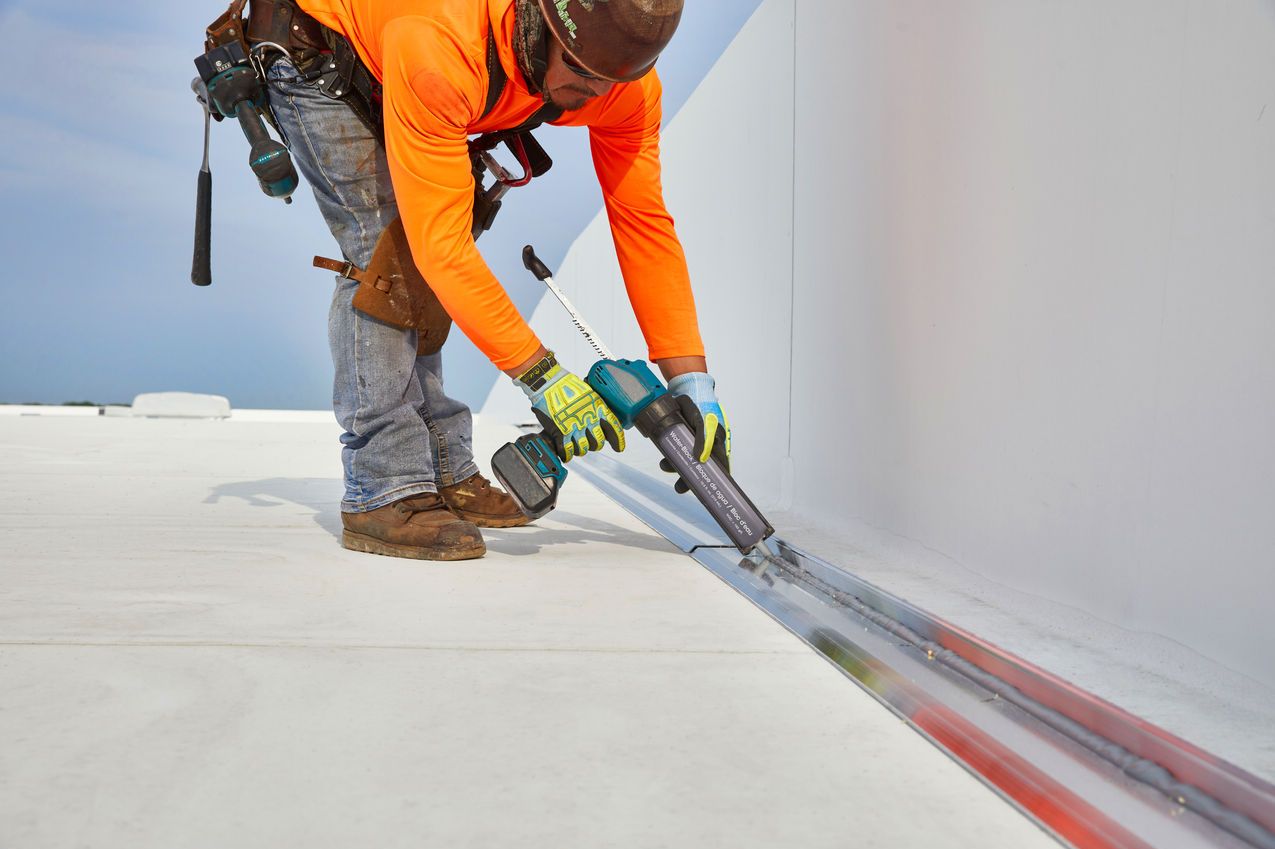
Examine all rooftop penetrations and flashings, making minor repairs or caulking as needed
Inspect the membrane itself and check that seams are secure
Check expansion joints for signs of leaking
Inspect and ensure that fascia, coping and metal are in good working order, repainting any rusted metal
Verify that flashing and tie ins around rooftop HVAC units is in good shape, which is especially critical if there have been other workers on the roof to repair or service the units
Simplifying roof maintenance with the right-sized equipment and products
Maintenance and repairs are an important part of roofing contractors’ businesses and GAF has developed the modern productivity tools that help them make repairs efficiently and effectively. These innovations not only help the contractor be more efficient, they can help save time and labor which directly results in less labor costs being charged to the building owner. Here are some of the solutions that GAF has developed to ensure your roof repairs are done right:
Modern productivity tools
In the case of TPO or PVC roofs when seams or flashings need to be repaired or replaced, a welder is going to be required for the work. Enter the GAF Backpack Welder. This game-changing kit was developed in collaboration with GAF commercial contractors to help them perform welds without the need for a generator or a power source on the roof.
Each Backpack Welder contains a BAK LiiOn Battery Powered Welder with two tips, a charger and a battery that fit securely in a purpose-built backpack. There is even room for the other necessary tools including a roll of detail membrane, cleaner, primer shears, a hand roller, and more.
This convenient kit allows the roofer to get on and off the roof faster to make necessary repairs without hassling with generators, power cords and making multiple trips on and off the roof. Time savings for the contractor equals cost savings for the building owner.
When pitch pans are involved in the repair, GAF delivers simplicity with its Aerosol Primer. Priming pitch pans traditionally with a primer and brush presents challenges, especially when it’s a tight space. The Aerosol Primer eliminates the need for a brush. Contractors simply shake it well and spray it on the inside and outside of the pan and over exposed pipes. In the Roofing it Right with Dave and EWally video series, the seasoned pros demonstrate in the episode below how the Aerosol Primer simplifies priming and helps contractor complete the work faster:
Go-to repair solutions
Helping contractors get on and off the roof faster while making the highest-quality repairs comes in the form of these contractor-favorite, liquid-applied repair solutions:
GAF Silicone Mastic is a multi-purpose, thick silicone sealant that can be applied to a variety of substrates. It can be brushed or troweled on without the use of fabric and is UV resistant, so it doesn’t require a top coat. The 20-ounce foil pack is convenient for carrying onto the roof and allows contractors to quickly make repairs.
GAF Ultra-clear SEBS Roof Sealant is a powerful repair sealant that should be in every contractor’s and facility management team’s repair kit. This crystal-clear roofing sealant is so versatile that it can be used on seams, roof vents, flashings, penetrations, gutters. It stays clear over time and won’t yellow, making it ideal for repairs on any substrate. The 10.1-ounce cartridge is lightweight and easy to get on the roof, fitting in most backpack and toolkits.
These repair products deliver liquid-applied productivity for contractors. Having the versatility and performance of these repair solutions helps contractors be efficient and productive, allowing them to spend less time and labor on your roof while still delivering the high-quality, long-lasting repairs that your roof system requires.
Start your roof maintenance plan today
According to GAF, neglecting your roof inspections and regular maintenance is one of the leading causes of premature roof failure. Long-term exposure to the elements, extreme weather, structural movement of the building, biological growth, and other trades accessing equipment on the roof are all normal situations that put your roof at risk. Fortunately, preventing failure is as simple as having regular, scheduled maintenance and inspections performed by a professional roofing contractor twice a year.
Find a GAF Certified Contractor* for a professional spring assessment and talk with them about an ongoing maintenance agreement to protect your investment.
*Contractors enrolled in GAF certification programs are not employees or agents of GAF, and GAF does not control or otherwise supervise these independent businesses. Contractors may receive benefits, such as loyalty rewards points and discounts on marketing tools from GAF for participating in the program and offering GAF enhanced warranties, which require the use of a minimum amount of GAF products. Your dealings with a Contractor, and any services they provide to you, are subject to the GAF Contractor Terms of Use.
