What Is Roof Decking?
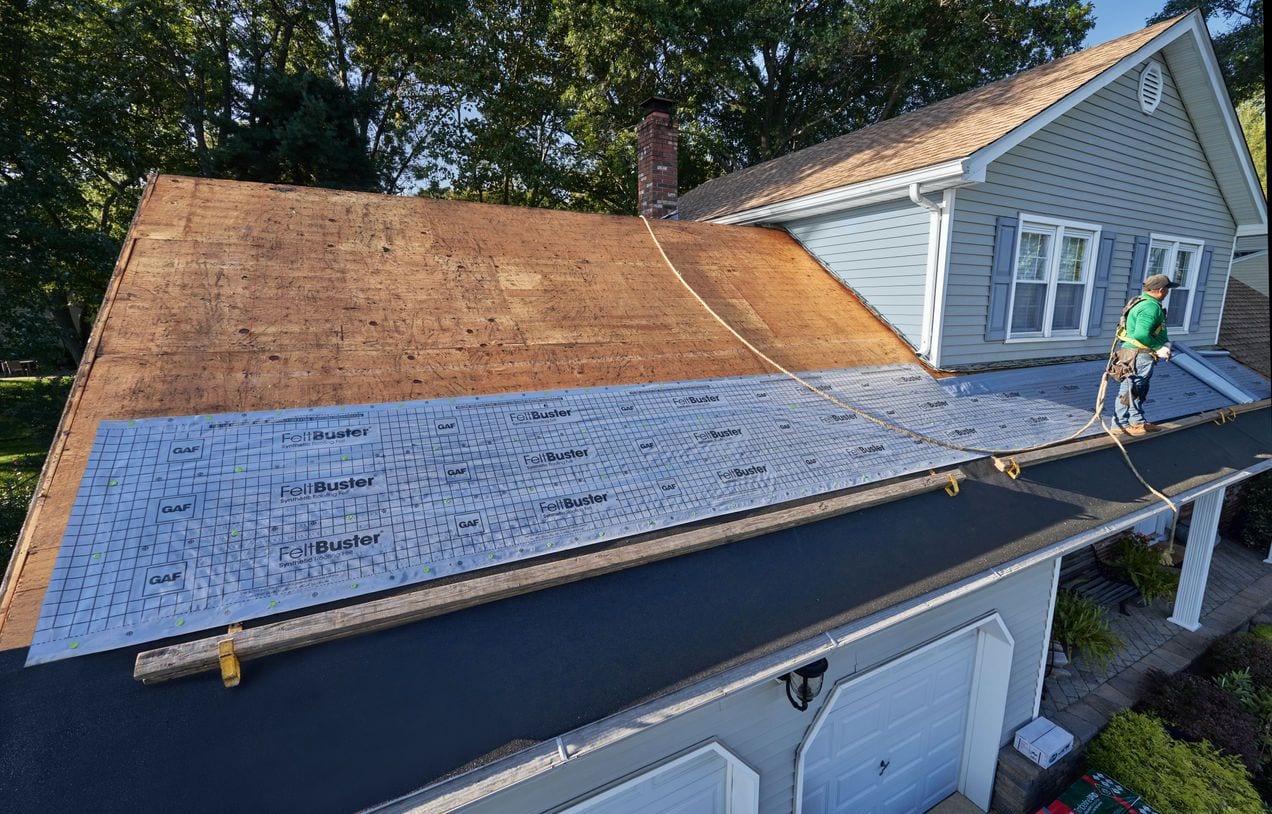
Wondering what roof decking is and what it's used for? Just as the foundation is the load-bearing portion of your home, decking is the load-bearing portion of your roof system. When a new home is built, flat and sturdy decking is installed between roof rafters and trusses. Then, roofers secure the roofing components that protect your home from the weather (like leak barriers and shingles) on top of that decking.
Is It Decking or Sheathing?
Roof decking and roof sheathing are two names for the same thing. Decking materials can include plywood, oriented strand board (OSB), wood planks, tongue-and-groove boards, and metal. Plywood and OSB are both common choices for builders and homeowners because of their flexibility, strength, and relative affordability. Decking is designed to be strong and resilient so it can bear the load of your roofing system, as well as other weights, such as snow.
Types of Roof Decking Materials
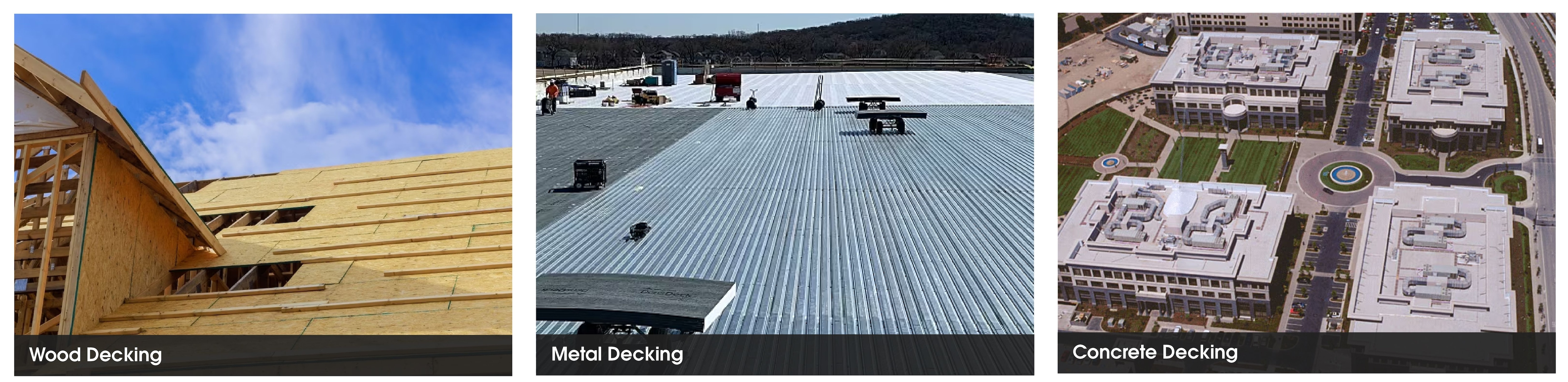
Overview of Wood, Metal, and Concrete Decking Options
Roof decking materials can generally be grouped into three main categories based on composition:
Decking Material | Composition & Common Forms | Typical Application |
Wood Decking | Plywood, Oriented Strand Board (OSB), dimensional lumber (planks), or tongue-and-groove boards. | Overwhelmingly the standard for pitched residential roofs. |
Metal Decking | Corrugated or ribbed steel sheeting, often treated for corrosion resistance. | Common for large commercial/industrial flat roofs and modern residential flat or low-slope designs. |
Concrete Decking | Poured structural concrete slabs or precast concrete planks. | Primarily used in high-rise commercial, industrial, or multi-family flat roof applications requiring extreme durability and fire resistance. |
Pros and Cons of Each Type of Roof Decking Material
1. Wood Decking (Plywood and OSB)
Wood-based products are the reigning champion in residential roofing due to their balance of cost, strength, and ease of use.
Pros | Cons |
Affordability: Generally, the least expensive material option, making it cost-effective for most residential projects. | Moisture Sensitivity: Highly susceptible to water damage, rot, and swelling if the primary roofing system fails to keep moisture out. |
Ease of Installation: Lightweight, easy to cut, and simple to fasten, allowing for fast installation by roofing crews. | Dimensional Stability (OSB): OSB can swell or warp more readily than plywood, especially if its edges are exposed to moisture for long periods during construction. |
Excellent Nailing Base: Provides a reliable, secure base for holding the nails and screws required for shingle installation. | Lower Fire Resistance: Standard wood products have a lower inherent fire resistance compared to metal or concrete. |
2. Metal Decking (Corrugated Steel)
Metal decking is typically formed from corrugated steel, providing an excellent structural diaphragm that stiffens the roof structure.
Pros | Cons |
High Strength-to-Weight: Provides superior structural support without adding excessive weight to the building's frame. | Thermal Bridging: Steel is highly conductive, allowing heat transfer and requiring extensive insulation (often installed above the deck) to achieve energy efficiency. |
Non-Combustible: Offers inherent fire resistance, a significant benefit in areas with strict fire codes. | Cost: Typically more expensive than standard wood decking materials. |
Durability: Resistant to rot, mold, termites, and moisture damage, offering a very long service life. | Acoustics: Can transmit more noise (rain, hail) than solid wood or concrete decks without proper soundproofing layers. |
3. Concrete Decking (Poured or Precast)
Concrete provides the ultimate in durability and is often used where the roof must also function as a structural floor.
Pros | Cons |
Extreme Durability: Offers unmatched strength and is highly resistant to fire, wind uplift, and impact damage. | Weight and Support: Significantly heavier than wood or metal, requiring a much stronger (and more costly) foundation and structural framing. |
Superior Fire Rating: Considered non-combustible, offering the highest level of fire protection. | Installation Complexity: Requires specialized equipment and highly skilled labor for pouring or lifting heavy precast panels. |
Excellent Thermal Mass: Helps to regulate interior temperatures and offers superior sound-dampening qualities. | Difficult to Modify: Later installation of roof penetrations, such as ventilation or HVAC equipment, is challenging and labor-intensive. |
Applications of Different Types of Roof Decking in Residential Settings
The application of a specific decking material in residential construction is almost entirely dependent on the structure's design and local building codes.
Wood Decking: This is the universal standard for traditional residential homes with sloped roofs (typically over 3:12 pitch). It is the material of choice for use beneath virtually all asphalt shingle, tile, and most shake roofing systems. Plywood and OSB are lightweight enough for standard framing and provide the necessary secure base for fasteners.
Metal Decking: While rare for the main roof of a typical house, metal decking is used in specific modern applications:
Low-Slope or Flat Roof Sections: Used in contemporary architectural designs that incorporate small, functional flat roof areas, providing a stable surface for membrane roofing systems.
Accessory Structures: Sometimes used in structures like high-end garages or outbuildings where a lightweight, non-combustible, and durable solution is desired.
Concrete Decking: This material is rarely used in standard single-family residential construction due to its high cost and immense weight, but it does have critical niche applications:
Roof Gardens/Green Roofs: For residential homes designed with a usable rooftop garden or deck, a concrete deck is often necessary to support the immense, saturated weight of the soil, planters, and landscaping.
High-Wind/Disaster Areas: In regions requiring extreme wind uplift and impact resistance, a structural concrete deck may be incorporated into a home’s design to create a highly resilient structure or integrated safe room.
Where Is the Roof Decking?
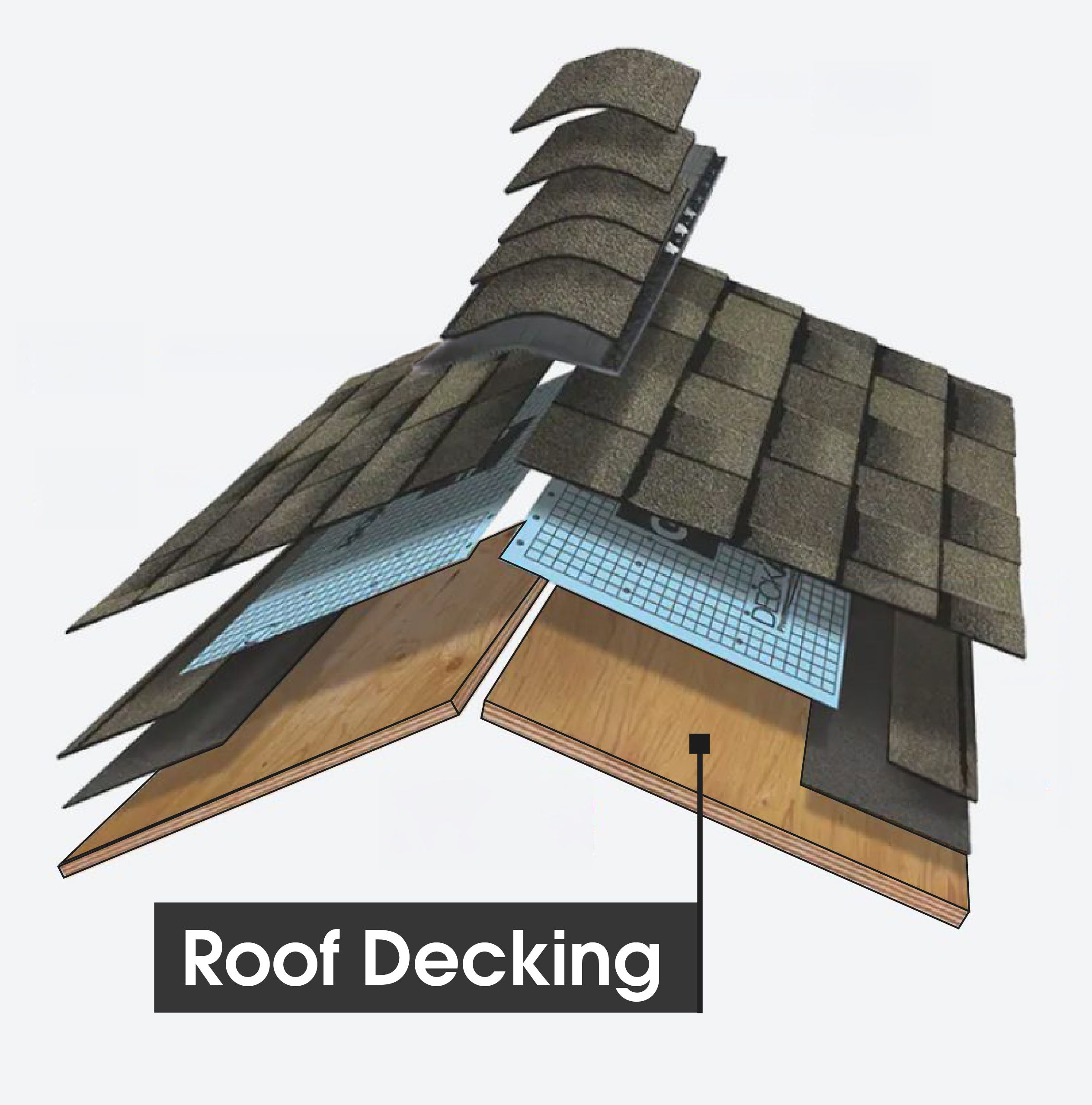
Your decking isn't visible from outside your house because it's underneath the roofing components. It is the dividing layer between the inside and outside of your home. After a wooden frame is built and the decking is placed, the roofing system is installed on top. Each part of the roofing system is layered on top of the previous one. Here are the components that make up a GAF roofing system in the order they are installed:
Leak barrier
Roof deck protection (underlayment)
Starter strip shingles
Shingles
Ventilation
Hip and ridge cap shingles
When Should I Replace My Roof Decking?
Replacing decking depends on the integrity of the decking system itself. Remember, decking is the structural basis for your entire roof system. That's why it's important to replace decking in cases of moisture damage, rot, holes or cracks, shrinkage, warping, or other decking inconsistencies.
Cost of Roof Decking
Budgeting for roof decking is an essential part of any reroofing project, as the integrity of the decking is often unknown until the old materials are removed. The primary factors influencing cost include the material chosen, the roof's pitch and complexity (steeper roofs increase labor time and cost), and the overall scope of work. Specifically, if moisture damage has spread, additional costs for replacing underlying components like insulation or rafters must be factored in. For average price ranges in residential projects, the material alone for the most common options—OSB and plywood—ranges from approximately $0.30 to $2.00 per square foot. When accounting for labor, fastener, and potential removal costs, the total installed price for wood decking often ranges from $2 to $7 per square foot. By comparison, the specialized materials used in flat roofing, like metal decking, are significantly more expensive, and structural concrete decking can be the costliest, often requiring greater structural support. To accurately budget for replacement, homeowners should secure a detailed quote from a GAF-certified contractor that includes separate line items for materials, labor, and a contingency fund for unforeseen decking repairs discovered during the tear-off process.
Does a New Roof Mean New Decking?
Repairing or replacing a roof does not automatically mean you need new decking. However, a repair or new roof installation is a great opportunity to inspect the decking and verify it's in excellent condition. You want your entire roof system to weather the upcoming years with strength.
If your decking has water damage or other integrity issues, it can't serve as a secure basis to uphold the components of the roofing system.
For example, damaged decking might not securely hold shingle nails. Loose shingle nails result in loose shingles. Loose shingles can lead to leaks, shingle blow-off, and eventually structural damage to your home due to moisture infiltration. Appropriate decking is so important that international residential codes, most local building codes, and most roofing manufacturer requirements insist on a solid sheathing prior to shingle installation.
Signs Your Roof Decking Needs Replacement
As a homeowner, you can visually inspect your roof on a semi-annual basis or after significant weather to check for possible decking issues. Signs that can indicate damage include:
Dips or swells in the roof surface
Interior moisture damage
Visible holes in the roof due to impact or weather
Mold on ceilings or in attic rafters or decking
Dry rot, especially near the roofline or in the attic
Moisture or mold in the attic insulation
What Should I Do When Reroofing?
Sometimes when you reroof, you need to repair or replace your decking. Roofers can't always predict this need ahead of time because the decking isn't always visible from the exterior. For example, if moisture has seeped through loose shingles and weakened the decking, your roofer will need to resolve the problem before installing the new roofing components over the top. Otherwise, installing a new roof over damaged decking would mean that your roof's defense system has a weak link. In cases where repair or replacement of decking is required, your roofers may have to amend their initial quote.
Roof Decking Installation Considerations
Proper installation is paramount, as the decking forms the foundation for your entire roofing system. A solid foundation ensures every subsequent component, from the leak barrier to the shingles, performs its job effectively.
Best Practices for Installing Roof Decking
Professional roofers follow specific guidelines to ensure the decking is structurally sound and ready for the remaining roof layers:
Proper Fastening: Decking sheets must be secured according to manufacturer and local code specifications, typically using the correct type and length of ring-shank nails or screws at specified intervals (often 6 inches on the edges and 12 inches in the field).
Expansion Gaps: When installing wood decking like OSB or plywood, small expansion gaps (81 inch) must be left between panels to allow for swelling due to temperature and humidity changes. Failure to do this can cause the panels to buckle, leading to visible distortions in the shingles.
H-Clips: For thinner plywood or OSB panels (especially 167 or 21 inch), H-clips are often used at the unsupported joints between rafters to provide rigidity and reduce deflection.
Staggering Joints: Like brickwork, decking joints must be staggered across the roof structure to maintain uniform structural integrity and prevent a continuous weak line.
Common Challenges Faced During Roof Decking Installation
Even with the best planning, certain challenges can complicate a decking project, particularly during a replacement:
Finding Hidden Damage: The most common challenge is discovering widespread water-damaged or rotted wood only after the old shingles and underlayment are removed. This requires immediate, costly replacement and extends the project timeline.
Incorrectly Spaced Rafters: In older homes, the spacing between rafters may be inconsistent or not align with modern standard 4x8 decking sheets, requiring custom cuts and additional labor.
Weather Exposure: Decking must be kept dry prior to and during installation. If rain soaks the wood before the underlayment is applied, the decking may swell or take on excess moisture, which can compromise the entire roof system if not allowed to dry fully.
Importance of Hiring a Professional for Proper Installation
Hiring a contractor certified by GAF ensures these challenges are managed correctly. They will:
Meet Code Requirements: Ensure the correct material type and thickness are used, and that all fasteners and expansion gaps comply with local building codes.
Structural Assessment: Accurately identify and replace compromised rafters or sheathing that would be invisible to the average homeowner.
Ensure Shingle Warranty Compliance: Many manufacturer warranties require a sound substrate. If new shingles are installed over compromised or improperly installed decking, the warranty could be voided.
Maintaining and Repairing Roof Decking
Unlike the outer roofing layers, decking maintenance is primarily focused on prevention. Since the decking is covered, its health is entirely dependent on the performance of the components installed above it.
The Importance of Regular Inspections for Roof Decking Health
Roof decking rarely fails on its own; damage is almost always a result of moisture infiltration. Therefore, the best maintenance is proactive, thorough inspection:
Semi-Annual Visual Inspection: Inspect your roof after severe weather or at least twice a year. Look for visible signs of shingle damage, missing or cracked flashing, or loose seals around vents, chimneys, and skylights.
Attic Inspection: Regularly inspect the underside of your decking from the attic. Look for water stains, dark spots, or mold/mildew—especially near the eaves, valleys, and vents. These are direct indicators of moisture penetration affecting the decking.
Soffit and Ventilation Checks: Ensure your attic ventilation system is clean and clear. Proper attic airflow is vital, as poor ventilation allows warm, moist air to collect beneath the deck, which can lead to condensation and eventual wood decay.
Routine Maintenance Tips to Extend the Lifespan of Roof Decking
The single most effective routine maintenance is to address leaks immediately. The moment a leak is detected, have a professional locate the source and repair it before the moisture has time to rot the structural wood. Other essential tips include:
Keep Gutters Clear: Clogged gutters cause water to back up and pool at the edges of the roof, often leading to water intrusion into the decking or fascia board.
Trim Trees: Keep tree branches trimmed back from the roof surface. Limbs that rub on the shingles will prematurely wear them down, creating an entry point for water that will ultimately affect the decking below.
What Do I Ask the Contractor?
In case your roofer tells you that you have damaged decking, it can be helpful to understand more about how the damage occurred and what it means moving forward. You can ask some of these questions to empower yourself:
What is the damage and how was it caused?
Has there been damage to other parts of my home as a result of the decking issues?
What material will you use to replace my current decking?
What are the pros and cons of the material you're recommending?
Do I need attic ventilation? If so, what will you use?
How will the decking repair or replacement impact my quote?
Remember, decking will help uphold your roof for decades to come, so it's important for it to be a solid foundation. If you are concerned about your roof decking or want to get started on a new roofing project, contact a contractor certified by GAF* today.
*Contractors enrolled in GAF certification programs are not employees or agents of GAF, and GAF does not control or otherwise supervise these independent businesses. Contractors may receive benefits, such as loyalty rewards points and discounts on marketing tools from GAF for participating in the program and offering GAF enhanced warranties, which require the use of a minimum amount of GAF products.
