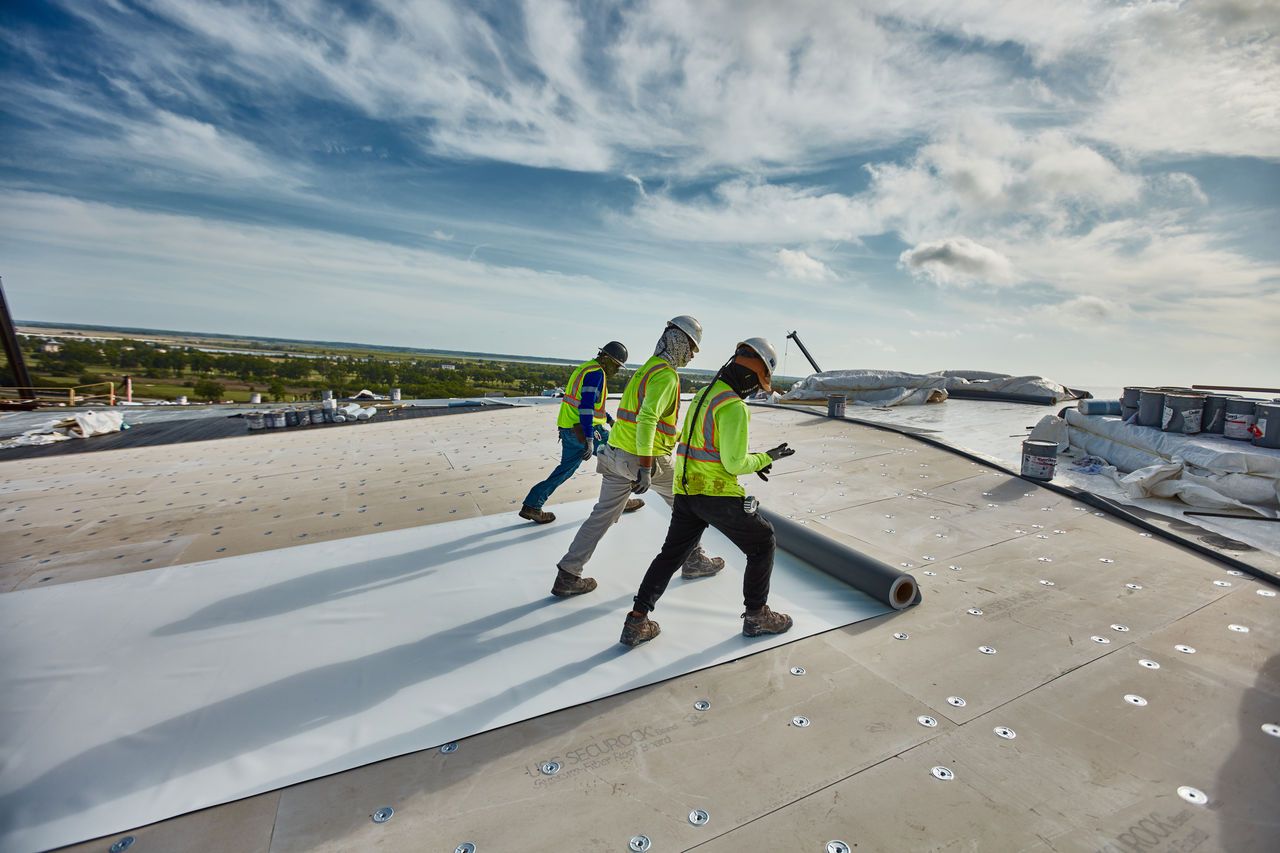
Among the single ply roofing membranes available in the commercial roofing industry, PVC (Polyvinyl Chloride) and PVC KEE (Ketone Ethylene Ester) stand out for the unique characteristics that make them a logical choice for projects where other membranes may fall short.
A PVC roofing membrane is a thermoplastic, which - like the more commonly used TPO (Thermoplastic Polyolefin) - has a chemical composition that allows it to become malleable when exposed to high heat. This means the seams can be heat-welded during installation to make a strong, flexible and durable monolithic membrane.
While TPO comprises a large segment of the market due to its low cost, fast installation and resistance to some chemicals, there are a number of situations where a PVC or PVC KEE roofing membrane may be a better choice.
Similarities and Differences - PVC and PVC KEE
Composition
PVC roof membranes were first developed in Europe in the 1960s, and made their appearance in the U.S. market in the 1970s. A PVC roof membrane utilizes plasticizers to make the polymer flexible, making it especially suitable for roofs with curves or challenging contours. In fact, flexibility is one of the characteristics cited by the designers of the Savannah Convention Center as a reason for their material selection. Because liquid plasticizers can, over time, migrate out of the membrane, a high-quality PVC membrane like GAF EverGuard™ PVC includes phthalates in its formulation, which improves membrane longevity.
On the other hand, the chemical composition of PVC KEE membranes, which were first developed in the 1980s, employs a combination of both liquid and solid plasticizers. Although more expensive than PVC, the solid plasticizer contributes to PVC KEE's enhanced durability, chemical and UV resistance which are defining characteristics of GAF EverGuard™ PVC KEE. It is a common misconception that PVC KEE and KEE membranes only contain solid plasticizers, but that is not currently the case for any membranes on the market. A combination of both plasticizers is needed to, at minimum, allow for manufacturability of the membrane.
Typical of thermoplastic membranes, PVC and PVC KEE are composed of three layers: a cap layer for weather protection, a reinforcing "scrim" of either polyester or fiberglass, and a "core" bottom layer that is similar in composition to the cap layer, but with less heat and UV stabilization as well as lower levels (or no) biocides. The type of scrim not only influences the properties of the membrane, but its possible installation methods. The table below illustrates the comparative properties of the different PVC roofing membranes based on the minimum values for different Types classified in ASTM D4434:
Material Property | Fiberglass - Type II | Polyester - Type III/IV |
Linear Dimensional Stability | ≤ 0.1% | ≤ 0.5% |
Tear Strength | 10 lbf | 45 lbf/90lbf |
Breaking Strength | 55 lbf/in | 200 lbf/in/275 lbf/in |
Dynamic Puncture Resistance | 10J | 20J |
Application | Adhered | Adhered, Mechanical, Induction Weld |
Performance
Both PVC and PVC KEE are known for the following outstanding characteristics:
Durability - excellent resistance to both UV radiation and heat aging
Fire Resistance - lower flame spread than other common single ply roofing membranes like EPDM or TPO
Grease Resistance - high resistance to animal fats, grease and vegetable oils when tested to ASTM D543
Chemical Resistance - excellent resistance to a broad range of chemicals, including peanut oil, lard, jet fuel and compressor oils per ASTM D5260
Available in white and other reflective colors, PVC and PVC KEE roof membranes are an excellent choice for high-SRI (Solar Reflective Index) roof applications. PVC KEE, due to its unique ability to attract less dirt over time, maintains a higher level of reflectivity for a longer time than PVC, with an Aged SRI Rating per CRRC of 93 vs 86.
GAF EverGuard PVC membranes come in thicknesses of 50, 60 or 80 mil, with or without fleece backing, and are durable and puncture-resistant.
GAF EverGuard™ PVC KEE is available in the same colors and thicknesses as standard PVC, also with or without fleece backing.
Check out our PVC roofing resources for more information on the unique properties of PVC and PVC KEE.
When Should You Choose PVC/PVC KEE?
Food Service/Manufacturing:
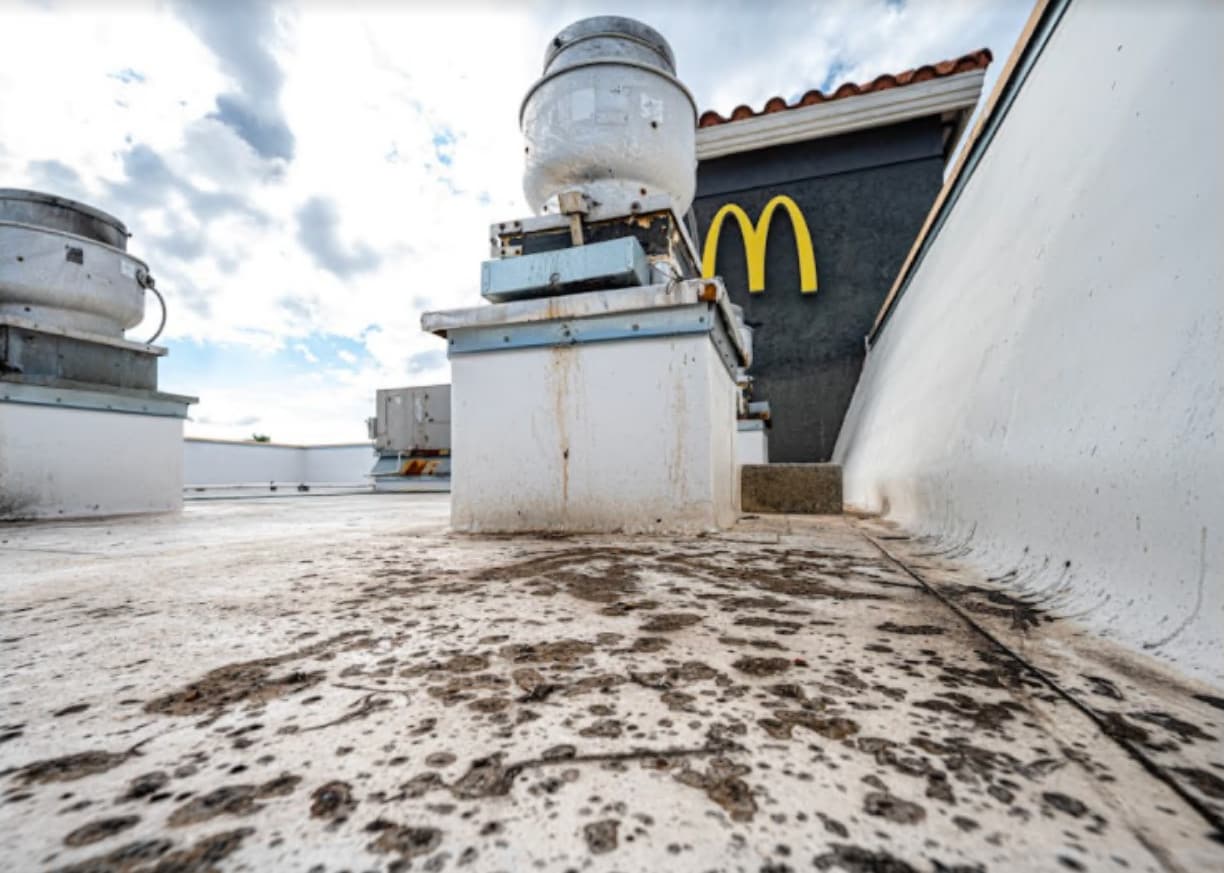
A durable roofing membrane with high resistance to animal fats, grease and oils, PVC and PVC KEE are recommended for restaurants, food processing plants and other high-performance industrial projects. Depending on the level of exposure and specific chemicals present, PVC KEE may be a better option as it may exhibit fewer property changes. Click here for more information about our food service roofing solutions.
Aviation/Transportation:
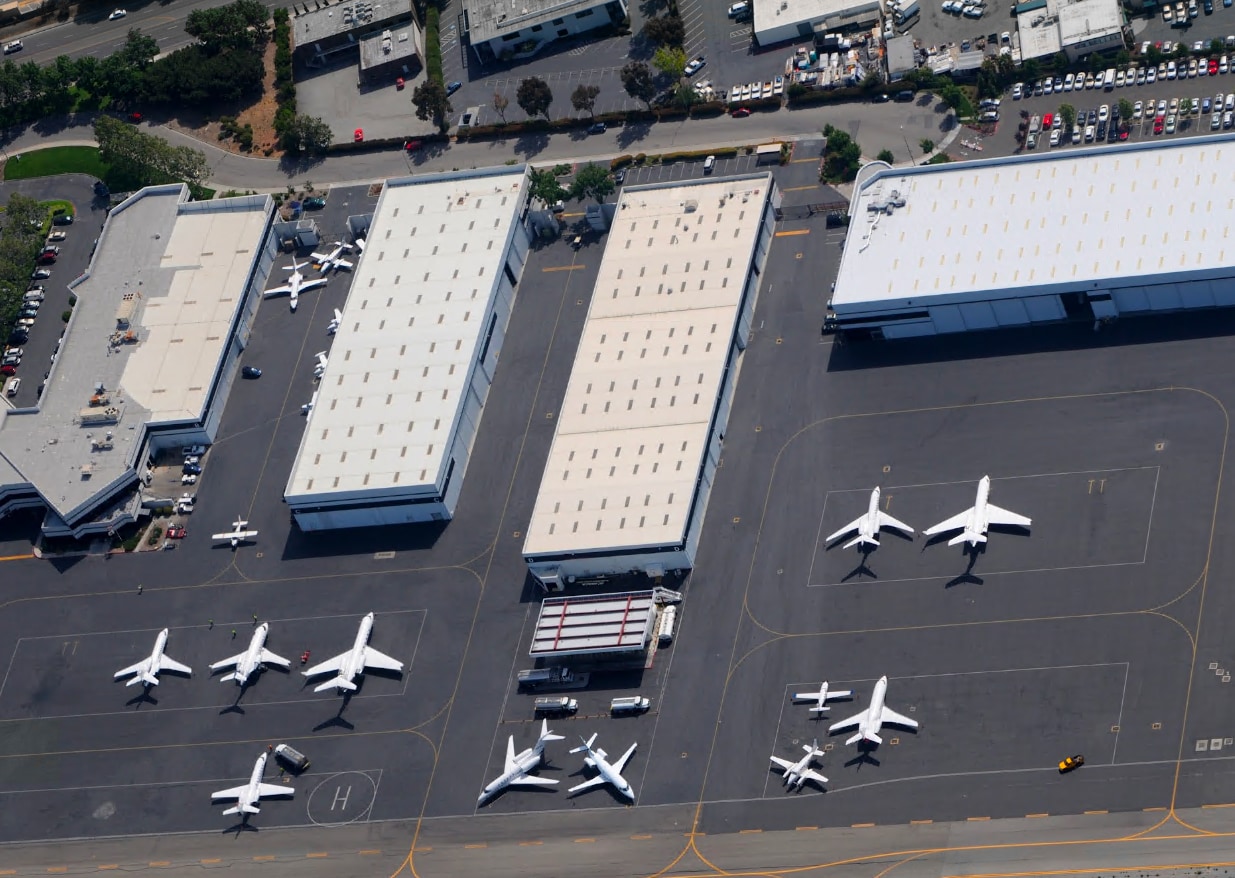
PVC KEE, with its long term durability and high resistance to jet fuel and petrochemicals, is an excellent choice for an airport roof, the roof of a building in close proximity to an airport, as well as facilities like truck stops and racetracks.
Education/Institutional:
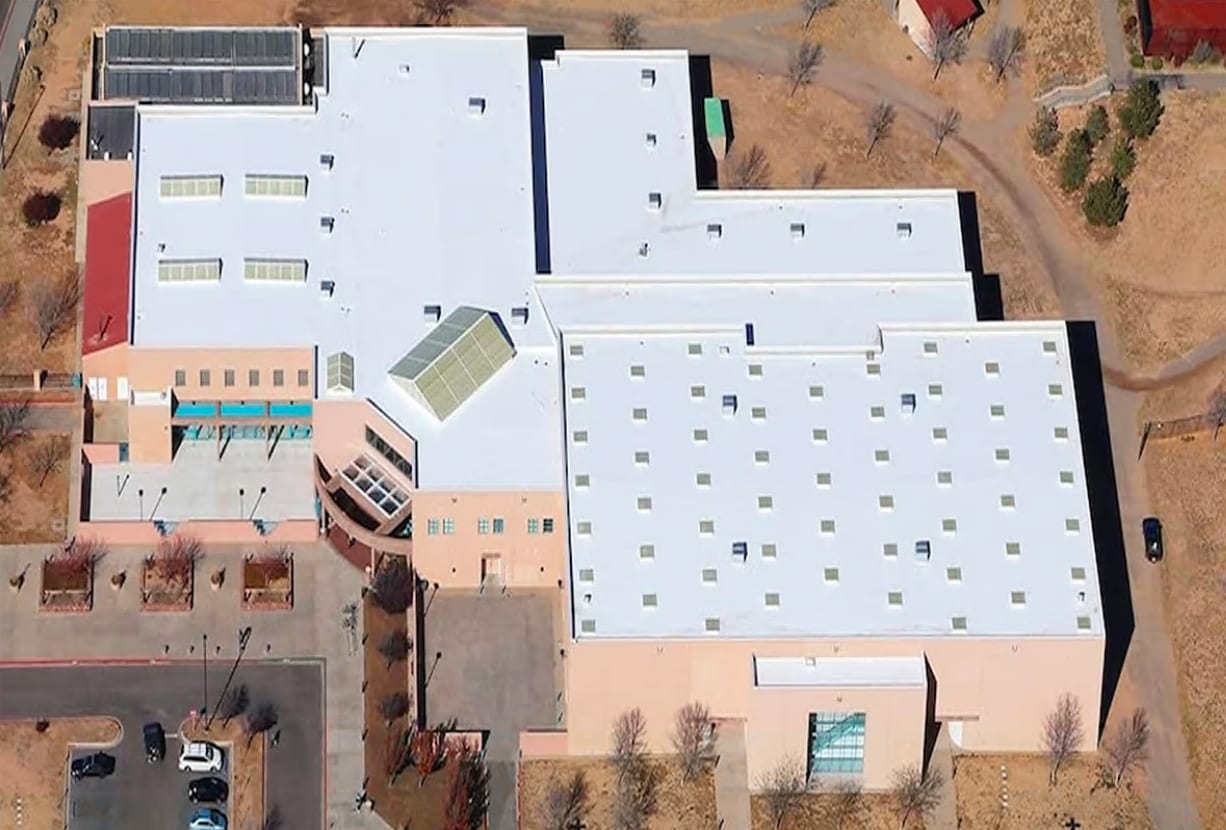
For the varied needs of a school or institutional building, both PVC and PVC KEE can be a wise choice. It is durable, easy to repair, and can handle a variety of conditions that could affect the longevity of the roof membrane, including fumes from chemistry labs, chemicals from an indoor swimming pool, or grease-laden exhaust from a cafeteria. For additional durability, fleece-backed PVC and PVC KEE can be combined with a modified bitumen base sheet to create a redundant, durable hybrid roof or as a retrofit of an existing modified roof assembly as described below.
Roof Retrofit Applications
Because PVC and PVC KEE roofing membranes can be installed quickly and economically, they are excellent choices for re-roofing existing buildings. If an existing asphaltic roof is in relatively good condition, without significant underlying moisture, a fleece-back PVC or PVC KEE membrane can be installed as a new top layer without the expense and disruption of tearing off the entire roof.
A hybrid roof provides the benefits of both roof membrane types. An added PVC or PVC KEE membrane can also increase the service life of the entire roof assembly by improving its UV resistance and weather protection, while the higher SRI may simultaneously decrease the heat load and cooling costs. PVC and PVC KEE are especially compelling options in educational buildings where re-roofing is an ongoing concern, and construction timelines for retrofits are often brief.
Case Studies
Two very different recently completed projects are compelling examples of the unique design opportunities that are possible with PVC roofing membranes.
Savannah Convention Center
Increasing demand prompted the $276 million expansion of the 330,000 SF Savannah Convention Center, sited on the Savannah River in Georgia. The ambitious project doubled the exhibit hall space, while also adding a ballroom, meeting rooms and over 900 parking spaces.
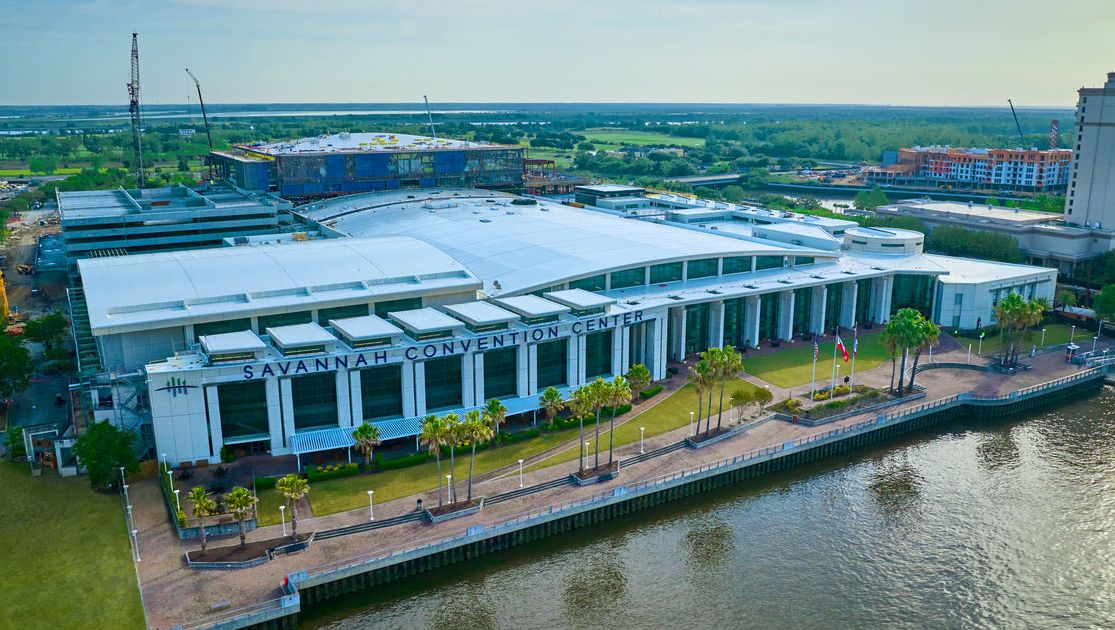
The parabolic shape of the new roof required a flexible and durable membrane, and since the existing roof was being retrofit at the same time, speed and ease of installation was paramount. The successful project, completed in September 2023, included the installation of over 4,300 squares of new 60-mil adhered GAF EverGuard™ PVC roofing membrane. The PVC membrane covered both the new portion of the building and was able to be used alongside the addition of EverGuard Polyiso insulation to recover the existing portion of the roof.
Alexis AuBuchon of Hansen Architects, P.C., the local architect on the project, stated that her firm often specifies PVC for public projects "because of its long-term durability and maintainability." For the parabolic design of the roof, "PVC's flexibility made it the ideal choice."
Getty Bagel Shop
The Getty Bagel Shop, situated in the Historic District of Portsmouth, New Hampshire, gave new life to a 1952 landmark building that once served as a gas station.
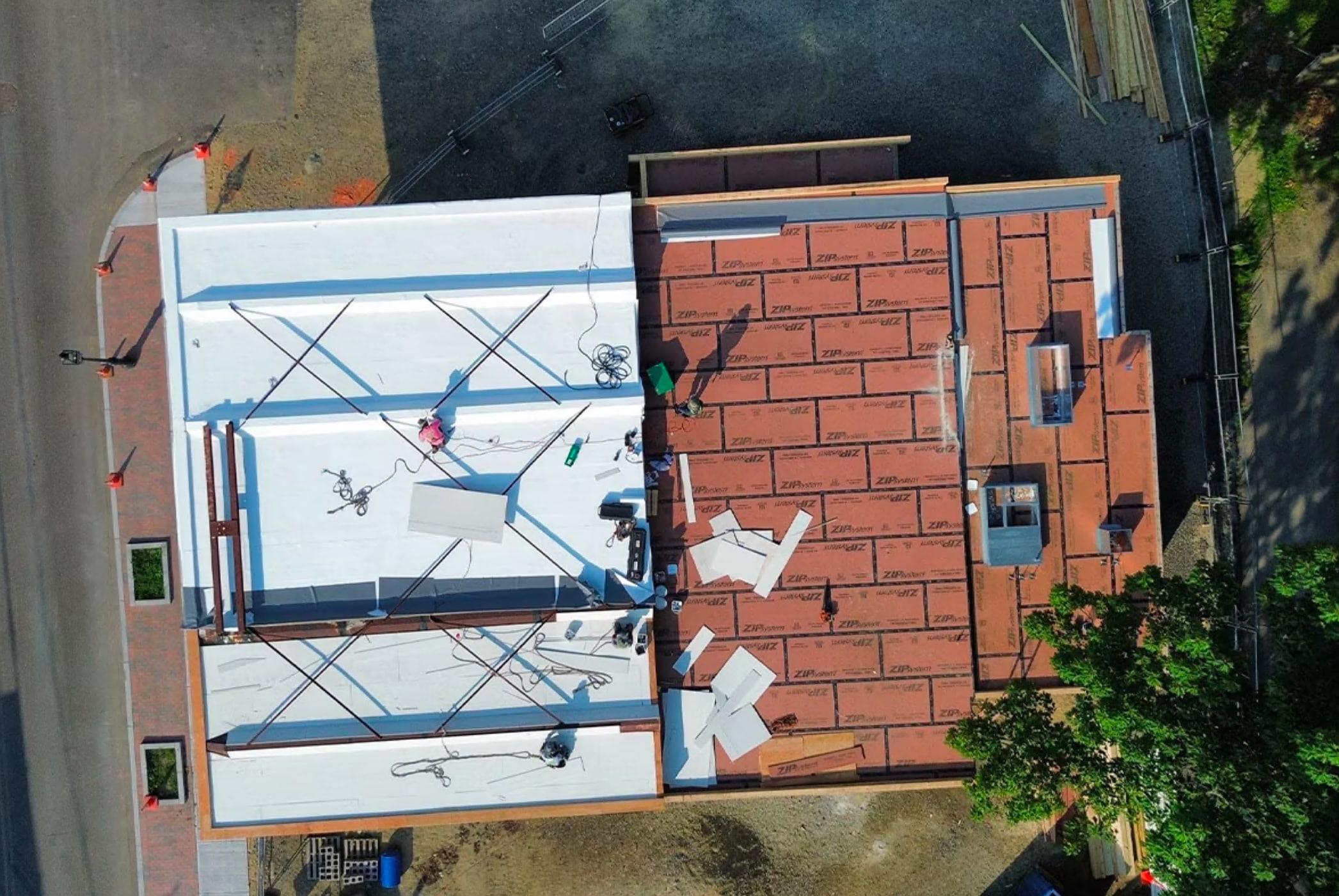
A PVC roofing membrane was chosen for its durability and resistance to oil, grease and animal fats. Jeff Dyer of Little Harbor Builders, the general contractor, consulted with GAF Senior Business Director Jon Wentworth, who recommended the PVC membrane.
Says Dyer: “Roofers in New England really love rubber roofs. But, time and again, you see rubber roofs that crack when exposed to the animal fats associated with cooking." The small project - completed in April 2025 - utilized 37 squares of induction welded 60 mil GAF EverGuard™ PVC roof membrane.
PVC Warranty Comparisons
GAF EverGuard™ PVC guarantees are available for up to 25 years, while GAF EverGuard™ PVC KEE roofs are eligible for guarantees of up to 30 years. Membrane thickness is an important contributing factor to the warranty length, as shown below:
MEMBRANE THICKNESS | GAF PVC | GAF PVC KEE | GAF FLEECE-BACK (PVC & PVC KEE) |
50 mil | Up to 15 yrs | Up to 20 yrs | Up to 20 yrs |
60 mil | Up to 20 yrs | Up to 25 yrs | Up to 25 yrs |
80 mil | Up to 25 yrs | Up to 30 yrs | Up to 30 yrs |
When choosing a single-ply roofing membrane for your project, it's reassuring to know there are options for every situation. If you're looking for a membrane with high resistance to chemicals or animal fats, excellent fire resistance, or durability against UV radiation and heat, a PVC or PVC KEE roofing membrane can meet multiple design and budget demands. Find out more at GAF PVC Roofing Resources or email the GAF Building and Roofing Science Team at buildingscience@gaf.com with any questions.
