Since your roof represents one of the most significant investments in your home, it's helpful to know how often a roof needs to be replaced, and how to tell when your roof might be nearing the end of its useful life. We'll review the most important things to look for, as well as tips for extending the lifespan of your roof.
What Factors Affect the Lifespan of Your Roof?
In general, most residential roofs need to be replaced every 20 to 25 years. However, the actual timespan depends on a number of factors, including the roof's materials, the quality of its installation, and the location of your home, among others:
Climate and Weather Exposure - Perhaps your home is located in a region subject to harsh winters, with prolonged freezes and frequent winter storms. Or maybe you experience hot, humid summers or live in a hurricane zone. If you're located in an area of weather extremes, your roof can be vulnerable to conditions that could adversely affect its durability and shorten its life.
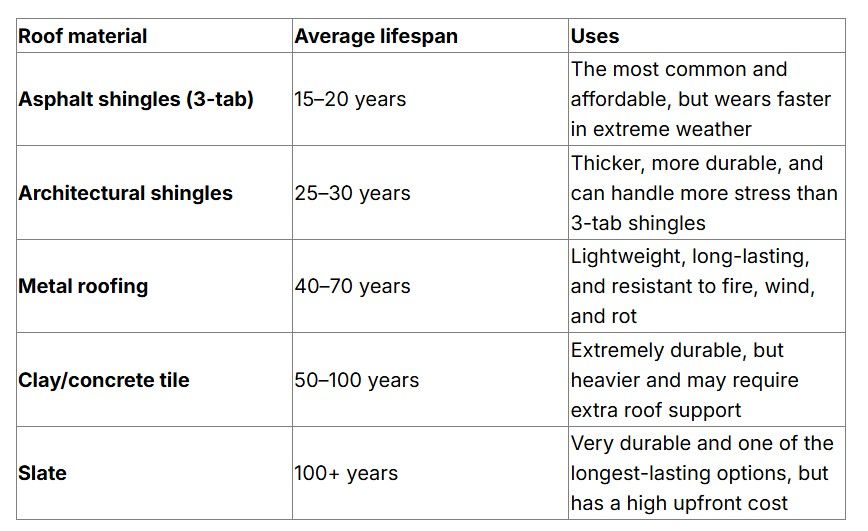
Materials - While asphalt shingles are the most commonly used roofing material in the U.S., there are other options as well, with a wide range in terms of quality and longevity. Here are some general comparisons:
Installation Quality - It's important to hire an experienced, licensed roofing contractor that is certified by a leading manufacturer. A certified roofing contractor can offer multiple options within your budget and provide manufacturers' warranties that will protect your investment for years to come.
Ventilation - Installing the proper roof ventilation will help reduce the heat and humidity in your attic. This not only lowers your air conditioning bill, but protects the integrity and longevity of your roof.
Tree coverage - A canopy of trees near your house provides many benefits, including shade in the hot summer months. However, it's important to keep those trees trimmed and healthy. Errant dead branches blown loose during a storm can damage your roof, and too much shade could cause moisture damage if shingles are not allowed to thoroughly dry out after heavy rains.
Signs Your Roof May Need Replacement
Damaged Shingles - If your shingles are curling, cracking, broken or missing granules, it's a sign they are showing their age and are no longer providing the optimum level of protection.
Multiple Leaks - Roof leaks can be caused by the effects of extreme wind and rain, as well as damage due to fallen tree limbs or flying debris, which can result in broken, detached or missing shingles. Other culprits that can lead to leaks include clogged gutters and damaged flashing around roof accessories like vents, chimneys or skylights. Obvious signs of leaks visible on the interior are ceiling stains, damp attic insulation, or musty smells.
Sagging Roof Deck - A roof that is visibly sagging or uneven signals potentially serious structural issues, and merits a professional evaluation and most likely a full roof replacement as soon as possible.
Daylight Visible - If you can see daylight through roof boards in your attic, this is another obvious sign that your roof is not watertight and should be replaced.
Tips to Extend Your Roof's Lifespan
Schedule Regular Inspections - Hiring a licensed building inspector or roofing contractor to inspect your roof on a regular basis – and always after a significant storm – can identify damage or potential problems that may not be visible to an untrained eye.
Perform Routine Maintenance - By cleaning out gutters, trimming overhanging branches, and clearing off heavy snow or ice dams, you can help minimize the possibility of damage to your roof.
Ensure Proper Attic Ventilation - Review with your roofing contractor the recommended type, number and placement of roof vents to optimize the removal of damaging heat and humidity that can shorten the life of your roof sheathing and shingles.
Address Repairs Promptly - Replace any damaged shingles, flashing or roof accessories as soon as possible to keep small problems from becoming much bigger ones.
When to Repair Vs Replace Your Roof
Here are some handy rules of thumb for repairing or replacing your roof:
Repair...
If you have a newer roof (10 years or less) with minor damage to shingles or flashing
If a leak is minor, easily traced, and there are no structural issues
Replace...
If the estimated cost of repairs exceeds 30% of the price of a new roof
If the affected roof is more than 15 years old
If the roof has been repaired several times already
If you plan to stay in your home for many more years
If your homeowner's insurance requires a new roof
Knowing what to look for in evaluating the condition of your roof, and making repairs promptly, can save time, headaches and money. When it is time to replace your roof, you can explore the full range of residential roofing options offered by GAF. If you have any questions, or are ready to proceed, find a GAF-certified* roofing contractor in your area.
*Contractors enrolled in GAF certification programs are not employees or agents of GAF, and GAF does not control or otherwise supervise these independent businesses. Contractors may receive benefits, such as loyalty rewards points and discounts on marketing tools from GAF for participating in the program and offering GAF enhanced warranties, which require the use of a minimum amount of GAF products. Your dealings with a Contractor, and any services they provide to you, are subject to the Contractor Terms of Use.
