A Contractor & Manufacturer Explain How Building Owners Should Evaluate Their Options
When a commercial roof begins leaking or showing signs of failure, building owners are often surprised to receive multiple recommendations from different roofing contractors.
One contractor recommends a roof coating. Another calls for a complete tear-off , and a third suggests a spray foam overlay.
Why are the recommendations so different?
Sometimes contractors are identifying different problems. Sometimes they're solving for different goals beyond simply stopping leaks. And occasionally, recommendations may be influenced by the contractor's preferred products, capabilities, or business interests.
The challenge for building owners is determining which solution best fits their building, budget, and long-term objectives.
In this article, you'll learn:
Why roofing contractors often recommend different solutions
Why the lowest bid isn't always the lowest long-term cost
What questions building owners should ask before making a decision
How to compare commercial roofing warranties
How roofing projects can impact business operations
Why Do Commercial Roofing Contractors Recommend Different Solutions?
Sometimes the Goal Is More Than Just Stopping Leaks
Not every roofing project is simply about fixing leaks.
Many facilities are also trying to improve energy efficiency, reduce operating costs, or extend the roof's service life as much as possible.
For example, a roof that qualifies for a restoration coating system may also be a candidate for a spray polyurethane foam (SPF) roofing system.
Both systems successfully seal leaks and extend the roof's life, but they offer different advantages:
Silicone Coatings: Perfect for restoring structurally sound roofs, stopping leaks, and reflecting UV rays to lower cooling costs at a highly economical price point.
Spray Polyurethane Foam (SPF): Incredibly effective for facilities such as manufacturing plants, refrigerated warehouses, food-processing facilities, and climate-controlled buildings because SPF offers one of the highest R-values per inch of any commercial roofing insulation.
While SPF typically costs more than a roof coating system, the additional insulation may create long-term energy savings that justify the investment.
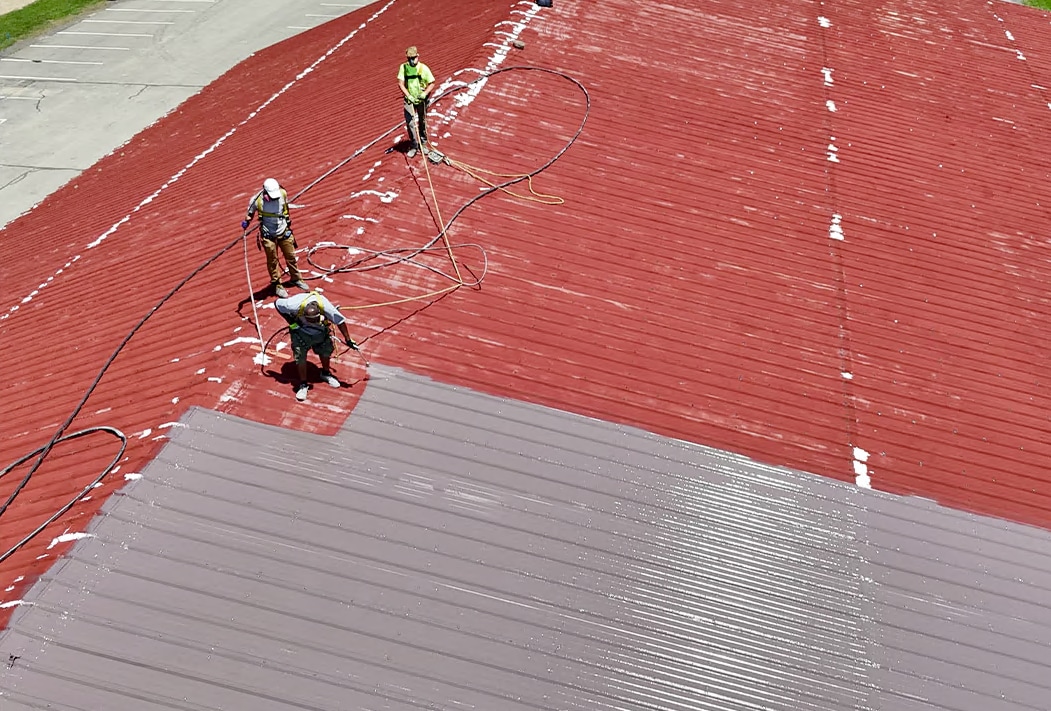
West Roofing Systems installs a GAF liquid applied roofing system on the North Park Ice Arena in Elyria, Ohio.
Facilities such as manufacturing plants, refrigerated warehouses, food-processing facilities, and climate-controlled buildings often place a high value on energy efficiency. In those situations, a contractor may recommend SPF because it provides one of the highest R-values per inch of any commercial roofing insulation.
While SPF typically costs more than a roof coating system, the additional insulation may create long-term energy savings that justify the investment.
Different Contractors Focus on Different Problems
Two contractors can inspect the same roof and focus on different issues.
One contractor may be primarily concerned with stopping leaks. Another may focus on improving drainage. A third may be looking at the roof's long-term performance and lifecycle costs.
Examples include:
Recommending additional drains to improve water flow and reduce ponding water.
Correcting low areas that collect water after rainfall.
Adding insulation to improve energy efficiency.
Restoring an existing roof to extend its service life.
Replacing a roof that has extensive wet insulation or structural concerns.
The key is understanding why the contractor is recommending a particular solution.
Not Every Recommendation Is the Right Recommendation
Building owners should also understand that not every recommendation is necessarily the best fit for their building.
If a contractor only installs single-ply TPO, they are highly likely to recommend a TPO overlay or replacement. If they don't have the equipment or certification for liquid-applied systems, they won't offer you a silicone restoration—even if your roof is the perfect candidate. We've seen situations where a roof had minimal wet insulation and was a strong candidate for restoration, yet the owner was only presented with a complete tear-off option. Conversely, we've also seen roofs that clearly required replacement, but a contractor proposed a coating system because it produced a lower bid.
Neither scenario serves the building owner's best interests.
The best recommendation should be based on the roof's condition, the owner's goals, and the expected long-term performance—not simply the highest or lowest project price.
Why the Cheapest Commercial Roofing Quote Isn't Always the Lowest Lifetime Cost
Many building owners naturally compare project costs first. While price is important, it shouldn't be the only factor.
Scope Differences Can Affect Pricing
Two contractors may appear to be offering the same solution, but their scopes of work can be very different.
For example:
One contractor measures the roof at 90,000 square feet.
Another measures the roof at 100,000 square feet.
That 10,000-square-foot difference can significantly impact material quantities and project pricing.
Similarly, one contractor may be proposing a thicker coating application, additional repairs, or more extensive preparation work.
When comparing bids, make sure you're comparing equivalent scopes of work.
Labor Experience Matters
Roofing systems are only as good as the crews installing them.
A lower-priced contractor may have less experienced labor, smaller crews, or fewer quality-control procedures.
Installation errors can lead to:
Premature leaks
Warranty claims
Operational disruptions
Additional repair costs
The lowest upfront price can sometimes result in higher costs later.
Questions Every Building Manager Should Ask
When evaluating roofing proposals, consider asking the following questions:
How much wet insulation did you find?
How did you determine that amount?
How much adhesion remains in the existing roofing system?
If we do nothing today, how much service life is realistically left?
Why are you recommending this solution over other alternatives?
What other options should we consider?
How quickly can your company respond if we experience a roofing issue?
Why are you recommending this manufacturer's system?
Can you explain the warranty in plain language?
What situations are covered under warranty?
What situations are not covered under warranty?
Another contractor recommended a different solution. Can you explain why they may have arrived at a different conclusion?
A reputable contractor should be comfortable answering these questions.
How to Compare Commercial Roofing Warranties
Warranties can vary significantly between roofing systems and contractors.
Contractor Warranty vs. Manufacturer Warranty
One of the first questions to ask is who stands behind the warranty.
If the warranty is provided solely by the contractor and that company closes or goes out of business, obtaining future warranty service may become difficult.
Manufacturer-backed warranties often provide an additional layer of protection because the manufacturer can typically authorize another certified contractor to perform warranty work if necessary.
Understand Key Warranty Terms
NDL (No Dollar Limit)
An NDL warranty generally means the manufacturer does not place a predetermined dollar cap on covered repairs or replacement work.
NPR (Non-Prorated)
A non-prorated warranty provides the same level of coverage throughout the warranty term.
For example, if a covered issue occurs during year 10 of a 20-year non-prorated warranty, coverage remains the same as it was in year 1.
Prorated warranties reduce coverage over time, which can leave building owners responsible for a larger portion of repair or replacement costs later in the warranty period.
Always ask contractors to explain warranty language in terms you can easily understand.
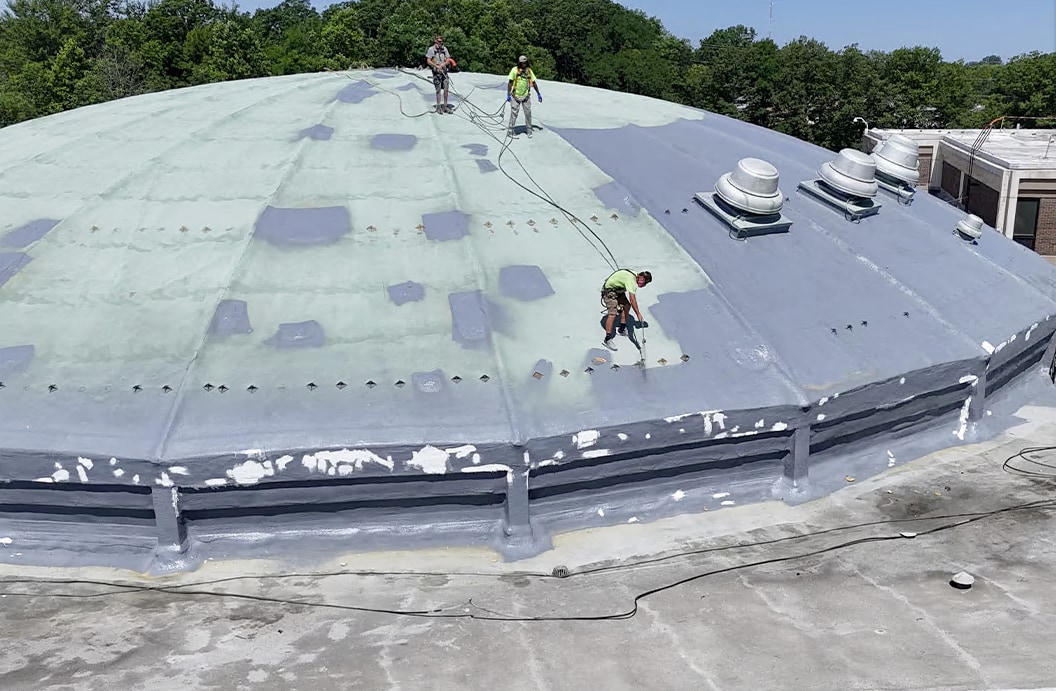
West Roofing Systems installs a GAF liquid applied roofing system on The Normandy High School building, constructed in Parma, Ohio in 1968.
How Roofing Projects Can Impact Business Operations
The roofing solution itself isn't the only cost to consider.
The installation process can affect building operations, productivity, and occupancy.
For example, a complete tear-off may require:
Interior protection to shield equipment, inventory, or occupants.
Temporary shutdowns of certain building areas.
Additional safety precautions.
Increased noise and disruption.
For manufacturing facilities, warehouses, schools, healthcare facilities, and other occupied buildings, operational disruption can create costs that extend well beyond the roofing project itself.
When comparing roofing options, consider not only the project price but also the impact on your day-to-day operations.
Final Thoughts
If you've received multiple roofing recommendations for the same building, don't assume one contractor is automatically right and the others are wrong.
Different contractors may be solving different problems, prioritizing different objectives, or interpreting the roof's condition differently.
The most important step is understanding the reasoning behind each recommendation.
When building owners ask good questions, compare scopes carefully, evaluate warranties, and consider operational impacts, they're far more likely to choose a roofing solution that aligns with their building's needs and long-term goals.
Is Your Roof a Candidate for Restoration?
You can extend the life of your commercial roof and avoid the high costs of a complete tear-off. Explore how GAF’s advanced liquid-applied silicone coatings can protect your facility.
Explore GAF Silicone Roof Coatings here.
