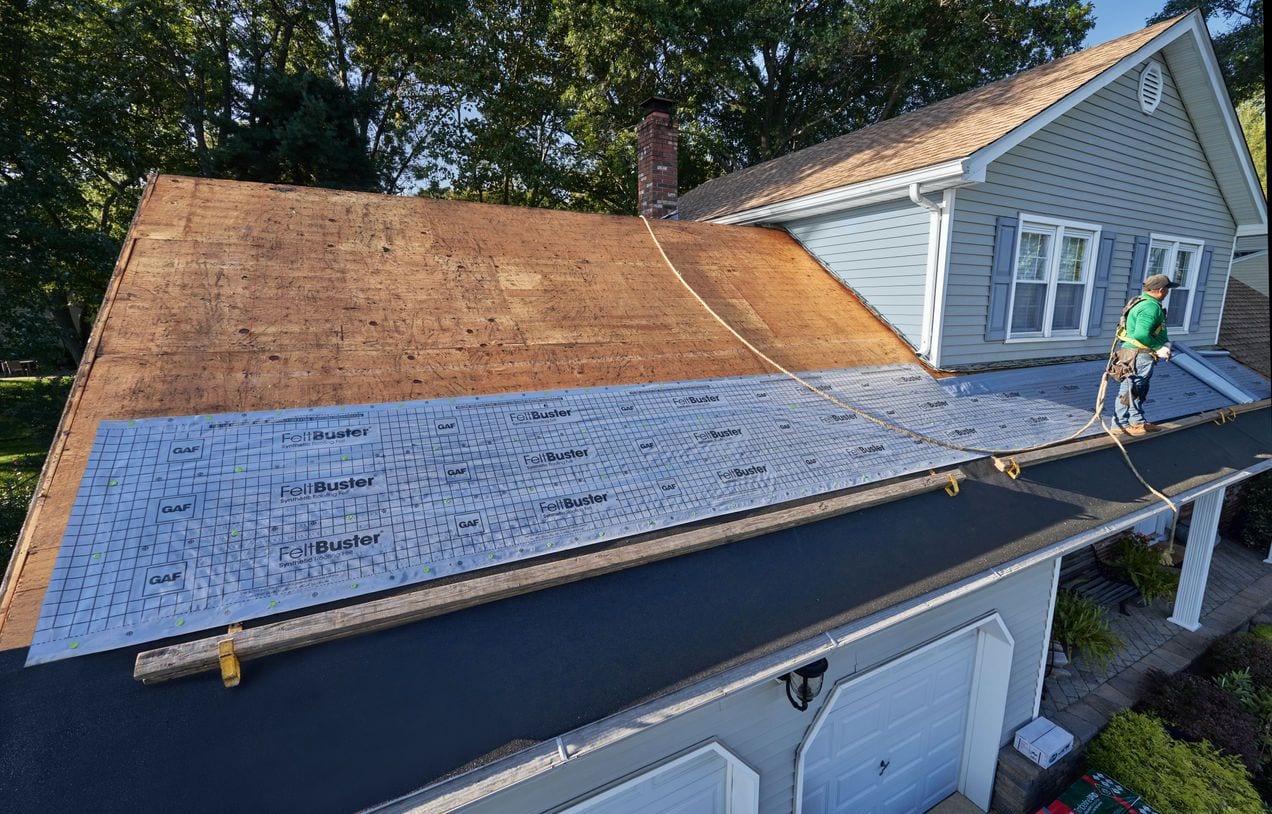
¿Qué es la cubierta del techo?
¿Te preguntas qué es la cubierta del techo y para qué sirve? Así como los cimientos son la parte de tu casa que soporta las cargas, la cubierta del techo es la parte de tu sistema de techo que soporta las cargas. Cuando se construye una casa nueva, se instala una cubierta del techo plana y resistente entre las vigas y las cerchas del techo. Luego, los techadores fijan sobre esa cubierta del techo los componentes del sistema de techo que protegen tu hogar de las inclemencias del tiempo (como las barreras contra filtraciones y las tejas).
¿Es una cubierta del techo o un contratechado?
Cubierta del techo y contratechado son dos nombres para la misma cosa. Los materiales de cubiertas del techo pueden incluir madera contrachapada, paneles de fibras orientadas (OSB), tablas de madera, tablas machihembradas y metal. Tanto la madera contrachapada como el OSB son opciones comunes entre constructores y propietarios debido a su flexibilidad, resistencia y precio relativamente accesible. La cubierta del techo está diseñada para ser fuerte y resistente, de modo que pueda soportar el peso de tu sistema de techo, así como otras cargas, como la nieve.
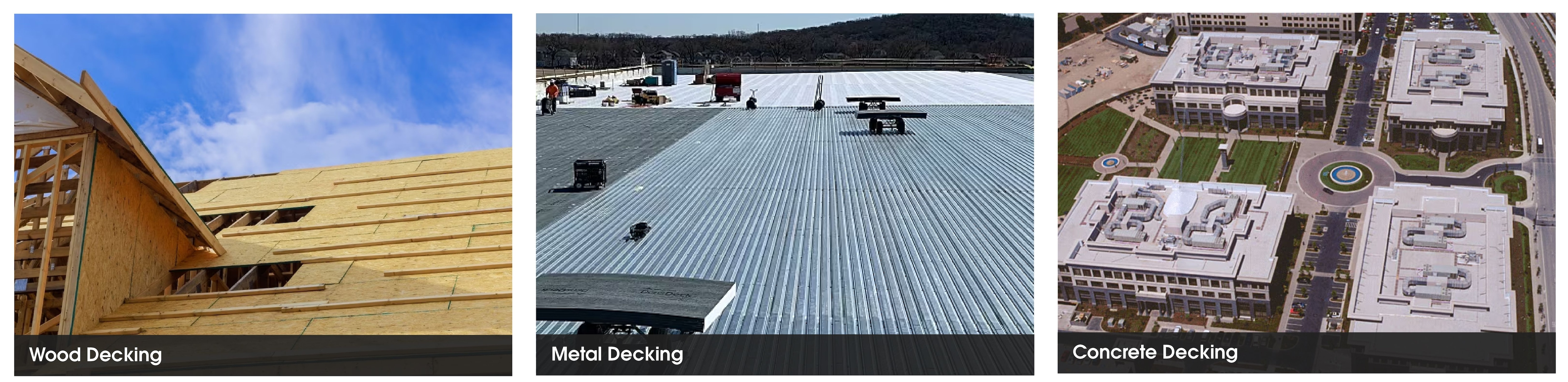
Tipos de materiales para cubiertas de techos
Descripción general de las opciones de cubiertas del techo de madera, metal y concreto
Los materiales para cubiertas del techo generalmente pueden agruparse en tres categorías principales según su composición:
Material de la cubierta del techo | Composición y formas comunes | Aplicación típica |
Cubierta de madera | Madera contrachapada, paneles de fibras orientadas (OSB), madera dimensional (tablas) o tablas machihembradas. | El estándar indiscutible para techos residenciales con pendiente. |
Cubierta de metal | Láminas de acero corrugadas o acanaladas, a menudo tratadas para resistir la corrosión. | Común en techos planos grandes de edificios comerciales e industriales, así como en diseños residenciales modernos de techos planos o de baja pendiente. |
Cubierta de concreto | Losas estructurales de concreto colado o losas prefabricadas de concreto. | Se utiliza principalmente en aplicaciones de techos planos de edificios comerciales de gran altura, industriales o multifamiliares que requieren una durabilidad extrema y resistencia al fuego. |
Ventajas y desventajas de cada tipo de material para cubiertas del techo
1. Cubierta de madera (madera contrachapada y OSB)
Los productos a base de madera son los más utilizados en los sistemas de techo residenciales debido a su equilibrio entre costo, resistencia y facilidad de uso.
Ventajas | Desventajas |
Precio accesible: en general, la opción de material menos costosa, lo que la hace rentable para la mayoría de los proyectos residenciales. | Sensibilidad a la humedad: muy susceptible a daños por agua, putrefacción e hinchazón si el sistema de techo principal no impide la entrada de humedad. |
Fácil instalación: liviana, fácil de cortar y sencilla de fijar, lo que permite una instalación rápida por parte de los techadores. | Estabilidad dimensional (OSB): el OSB puede hincharse o deformarse con mayor facilidad que el contrachapado, especialmente si los bordes quedan expuestos a la humedad durante largos períodos de tiempo durante la construcción. |
Excelente base para clavado: proporciona una base confiable y segura para sostener los clavos y tornillos necesarios para la instalación de las tejas. | Menor resistencia al fuego: los productos de madera estándar tienen una menor resistencia al fuego inherente en comparación con el metal o el concreto. |
2. Cubierta de metal (acero corrugado)
La cubierta de metal suele estar hecha de acero corrugado, lo que proporciona un excelente diafragma estructural que refuerza la estructura del techo.
Ventajas | Desventajas |
Alta relación resistencia-peso: brinda un soporte estructural superior sin agregar un peso excesivo a la estructura del edificio. | Puente térmico: el acero es altamente conductor, lo que permite la transferencia de calor y requiere un aislamiento considerable (a menudo instalado sobre la cubierta) para lograr eficiencia energética. |
No combustible: ofrece resistencia inherente al fuego, un beneficio muy importante en áreas con códigos de incendio estrictos. | Costo: suele ser más costosa que los materiales estándar para cubiertas de madera. |
Durabilidad: resistente a la putrefacción, el moho, las termitas y los daños por humedad, ofreciendo una vida útil muy prolongada. | Acústica: puede transmitir más ruido (lluvia, granizo) que las cubiertas de madera maciza o de concreto, si no cuenta con capas de insonorización adecuadas. |
3. Cubierta de concreto (colado o prefabricado)
El concreto ofrece el máximo nivel de durabilidad y suele utilizarse cuando el techo también debe funcionar como piso estructural.
Ventajas | Desventajas |
Durabilidad extrema: ofrece una resistencia inigualable y es altamente resistente al fuego, al levantamiento causado por el viento y a los daños por impacto. | Peso y capacidad de soporte: es considerablemente más pesado que la madera o el metal, por lo que requiere cimientos y una estructura de soporte mucho más resistentes (y costosos). |
Calificación ignífuga superior: es considerado no combustible, por lo que ofrece el nivel más alto de protección contra incendios. | Instalación compleja: requiere equipo y mano de obra especializados para el colado o para levantar y mover los paneles prefabricados. |
Excelente masa térmica: ayuda a regular las temperaturas del interior y tiene cualidades superiores en cuanto al aislamiento de sonidos. | Difícil de modificar: la instalación posterior de penetraciones en el techo, como sistemas de ventilación o equipos de HVAC, es compleja y requiere mucha mano de obra. |
Aplicaciones de los distintos tipos de cubiertas del techo en entornos residenciales
La aplicación de un material específico para cubiertas del techo en la construcción residencial depende casi por completo del diseño de la estructura y de los códigos de construcción locales.
Cubiertas de madera: este es el estándar universal para viviendas residenciales tradicionales con techos en pendiente (en general con pendiente superior a 3:12). Es el material preferido para usar debajo de prácticamente todos los sistemas de techo de tejas asfálticas, tejas y la mayoría de los sistemas de techo de tablillas de madera. La madera contrachapada y el OSB son lo suficientemente livianos para las estructuras convencionales y proporcionan la base segura necesaria para los sujetadores.
Cubierta de metal: aunque poco común para el techo principal de una vivienda típica, la cubierta de metal se utiliza en aplicaciones modernas específicas:
Secciones de techos de baja pendiente o techos planos: se utilizan en diseños arquitectónicos contemporáneos que incorporan áreas pequeñas y funcionales de techos planos, proporcionando una superficie estable para los sistemas de techo de membrana.
Estructuras secundarias: a veces se utiliza en estructuras como garajes de alta gama o dependencias, donde se busca una solución ligera, ignífuga y duradera.
Cubierta de concreto: este material rara vez se utiliza en la construcción residencial unifamiliar estándar debido a su alto costo y enorme peso, pero sí tiene aplicaciones especializadas importantes:
Jardines en azoteas/techos verdes: en viviendas diseñadas con un jardín o una plataforma utilizable sobre el techo, a menudo se necesita una cubierta de concreto para soportar el enorme peso saturado de la tierra, las jardineras y el paisajismo.
Áreas propensas a vientos fuertes o desastres: en regiones que requieren una resistencia extrema al levantamiento causado por el viento y a los impactos, puede incorporarse una cubierta estructural de concreto al diseño de la vivienda para crear una estructura altamente resistente o una habitación segura integrada.
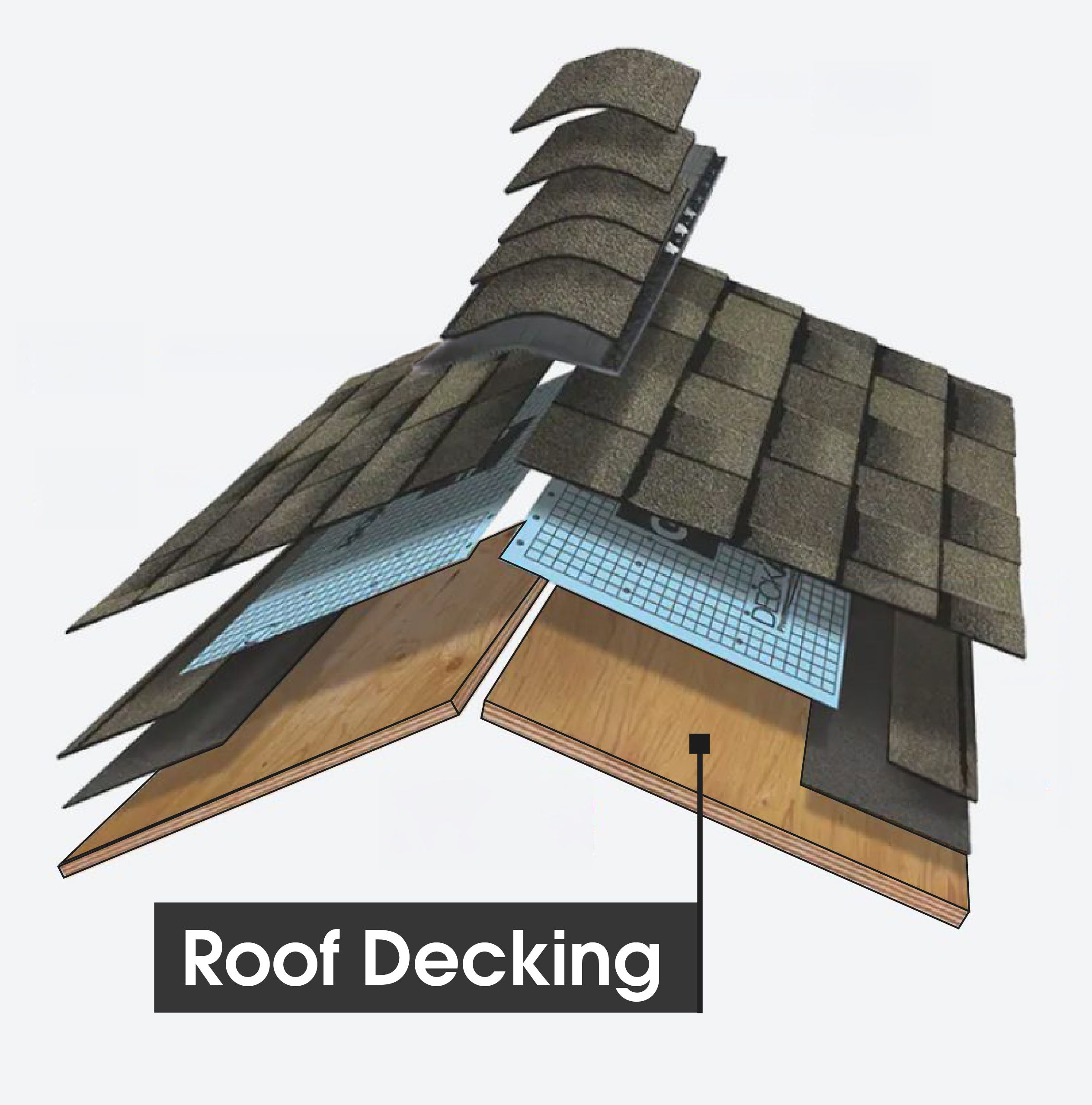
¿Dónde se encuentra la cubierta del techo?
La cubierta del techo no es visible desde el exterior de tu casa porque se encuentra debajo de los componentes del sistema de techo. Es la capa que divide el interior y el exterior de tu casa. Después de construir el armazón de madera y colocar la cubierta, se instala el sistema de techo encima. Cada parte del sistema de techo se coloca en capas, una encima de la otra. Estos son los componentes de un sistema de techo GAF en el orden de su instalación:
Barrera contra goteras
Protección para cubierta de techo (capa base)
Tejas de hilada inicial
Tejas
Ventilación
Tejas de caballete
¿Cuándo debo reemplazar la cubierta del techo?
El reemplazo de la cubierta del techo depende del estado de la propia cubierta del techo. Recuerda que la cubierta del techo es la base estructural de todo tu sistema de techo. Por eso es importante reemplazarla cuando presenta daños por humedad, pudrición, agujeros o grietas, contracción, deformaciones u otras irregularidades.
Costo de la cubierta del techo
Presupuestar la cubierta del techo es una parte esencial de cualquier proyecto de reemplazo de techo, ya que a menudo no se conoce el estado de la cubierta del techo hasta que se retiran los materiales antiguos. Los principales factores que influyen en el costo incluyen el material elegido, la pendiente y complejidad del techo (los techos más inclinados aumentan el tiempo y el costo de la mano de obra) y el alcance general del trabajo. En particular, si el daño causado por la humedad se ha extendido, deben considerarse los costos adicionales de reemplazar componentes subyacentes, como el aislamiento o las vigas. En proyectos residenciales, el material por sí solo para las opciones más comunes, como OSB y madera contrachapada, oscila entre $0.30 y $2.00 por pie cuadrado. Al considerar los costos de mano de obra, sujetadores y posible retiro de materiales, el precio total instalado de una cubierta de madera suele oscilar entre $2 y $7 por pie cuadrado. En comparación, los materiales especializados utilizados en techos planos, como las cubiertas de metal, son considerablemente más costosos, y las cubiertas estructurales de concreto pueden ser las más costosas de todas, ya que suelen requerir un mayor soporte estructural. Para presupuestar el reemplazo con precisión, los propietarios deben solicitar una cotización detallada a un contratista certificado por GAF que incluya partidas separadas para materiales, mano de obra y un fondo de contingencia para reparaciones imprevistas de la cubierta del techo que se descubran durante el proceso de retiro del techo existente.
¿Un techo nuevo significa una cubierta del techo nueva?
Reparar o reemplazar un techo no significa automáticamente que necesites una cubierta del techo nueva Sin embargo, una reparación o la instalación de un techo nuevo es una excelente oportunidad para inspeccionar la cubierta del techo y verificar que se encuentre en excelentes condiciones Quieres que todo tu sistema de techo resista los próximos años con fuerza.
Si tu cubierta del techo presenta daños causados por el agua u otros problemas que afectan su integridad, no podrá servir como una base segura para sostener los componentes del sistema de techo.
Por ejemplo, una cubierta dañada podría no sujetar de manera segura los clavos de las tejas. Los clavos de las tejas flojos se traducen en tejas sueltas. Las tejas sueltas pueden provocar filtraciones, voladura de tejas y, con el tiempo, daños estructurales en tu casa debido a la filtración de humedad. La cubierta del techo adecuada es tan importante que los códigos residenciales internacionales, la mayoría de los códigos de construcción locales y los requisitos de la mayoría de los fabricantes de techos exigen un contratechado sólido antes de la instalación de las tejas.
Señales de que la cubierta de tu techo necesita un reemplazo
Como propietario, puedes inspeccionar visualmente tu techo de forma semestral o después de fenómenos climáticos importantes para detectar posibles problemas en la cubierta. Algunas señales que pueden indicar daños incluyen:
Hundimientos o abultamientos en la superficie del techo
Daños por humedad en el interior
Agujeros visibles en el techo debido a impactos o condiciones climáticas
Moho en los techos o en las vigas del ático o la cubierta
Podredumbre seca, especialmente cerca del borde del techo o en el ático
Humedad o moho en el aislante del ático
¿Qué debo hacer durante la renovación del techado?
Cuando renuevas el techado, a veces es necesario reparar o reemplazar la cubierta del techo. Los techadores no siempre pueden predecir esta necesidad con antelación porque la cubiert no siempre es visible desde el exterior. Por ejemplo, si la humedad penetró a través de tejas sueltas y debilitó la cubierta, el techador necesitará resolver el problema antes de instalar los nuevos componentes del techo encima. De lo contrario, instalar un techo nuevo sobre una cubierta dañada significaría que el sistema de defensa de tu techo tendría un eslabón débil. En los casos donde se requiera reparar o reemplazar la cubierta, es posible que los techadores tengan que modificar su cotización inicial.
Consideraciones para la instalación de cubiertas del techo
La instalación adecuada es fundamental, ya que la cubierta constituye la base de todo tu sistema de techo. Un cimiento firme garantiza que cada componente posterior, desde la barrera contra goteras hasta las tejas, haga su trabajo a la perfección.
Buenas prácticas para la instalación de cubiertas del techo
Los techadores profesionales siguen pautas específicas para garantizar que la cubierta del techo sea estructuralmente sólida y esté lista para las capas restantes del sistema de techo:
Sujeción apropiada: los paneles de la cubierta deben fijarse de acuerdo con las especificaciones del fabricante y del código local, por lo general, se usa el tipo y la longitud correctos de clavos roscados o tornillos a intervalos especificados (a menudo a 6 pulgadas en los bordes y a 12 pulgadas en el resto de la superficie).
Juntas de expansión: al instalar cubiertas de madera como OSB o madera contrachapada, deben dejarse pequeñas juntas de expansión (81 de pulgada) entre los paneles para permitir su expansión debido a los cambios de temperatura y humedad. No hacerlo puede hacer que los paneles se deformen, provocando deformaciones visibles en las tejas.
Clips en H: en paneles más delgados de madera contrachapada u OSB (especialmente de 167 o 21 pulgadas), a menudo se utilizan clips en H en las uniones sin apoyo entre cabios para aportar rigidez y reducir la flexión.
Juntas intercaladas: al igual que en una pared de ladrillos, las juntas de la cubierta del techo deben colocarse de forma alternada a lo largo de la estructura del techo para mantener una integridad estructural uniforme y evitar una línea continua de debilidad.
Desafíos comunes durante la instalación de la cubierta del techo
Incluso con la mejor planificación, ciertos desafíos pueden complicar un proyecto de cubierta del techo, especialmente durante un reemplazo:
Detección de daños ocultos: el desafío más común es descubrir daños generalizados por agua o madera podrida una vez que se retiran las tejas y la base de techo antiguas. Esto requiere un reemplazo inmediato y costoso, además de extender el plazo del proyecto.
Separación incorrecta entre los cabios: en las viviendas más antiguas, la distancia entre los cabios puede ser irregular o no coincidir con los paneles estándar modernos de 4x8 pies para cubiertas del techo, lo que requiere cortes a medida y mano de obra adicional.
Exposición a la intemperie: la cubierta del techo debe mantenerse seca antes y durante la instalación. Si la lluvia empapa la madera antes de que se coloque la capa base, la cubierta del techo puede hincharse o absorber humedad excesiva, lo que podría comprometer todo el sistema de techo si no se deja secar por completo.
La importancia de contratar a un profesional para la correcta instalación
Pagarle a un contratista certificado por GAF garantiza el buen manejo de estos desafíos. Este profesional podrá:
Cumplir con los requisitos de los códigos: se asegurará de que se utilicen el tipo y el espesor de material correctos, y que todos los sujetadores y las juntas de expansión cumplan con los códigos de construcción locales.
Hacer una evaluación estructural: identificará y reemplazará con precisión los cabios o el contratechado dañados que pasarían desapercibidos para el propietario promedio.
Garantizar el cumplimiento de la garantía de las tejas: muchas garantías de fabricantes exigen un sustrato en buenas condiciones. Si se instalan tejas nuevas sobre una cubierta del techo dañada o instalada incorrectamente, la garantía podría quedar anulada.
Mantenimiento y reparación de la cubierta del techo
A diferencia de las capas exteriores del techo, el mantenimiento de la cubierta se centra principalmente en la prevención. Como la cubierta del techo permanece oculta bajo los demás componentes del sistema de techo, su estado depende por completo del desempeño de los componentes instalados sobre ella.
La importancia de las inspecciones regulares para mantener la cubierta del techo en buen estado
La cubierta del techo rara vez falla por sí sola; los daños casi siempre son consecuencia de la infiltración de humedad. Por eso, el mejor mantenimiento consiste en realizar inspecciones exhaustivas de forma proactiva:
Inspección visual semestral: inspecciona tu techo luego de un temporal o al menos dos veces al año. Busca señales visibles de daños en las tejas, tapajuntas faltantes o agrietados, o sellos sueltos alrededor de ventilaciones, chimeneas y tragaluces.
Inspección del ático: inspecciona periódicamente la parte inferior de la cubierta del techo desde el ático. Observa si hay manchas de agua, zonas oscuras o moho, en particular cerca de los aleros, los valles y las ventilaciones. Estos son indicadores directos de que la humedad está penetrando y afectando la cubierta del techo.
Inspección de los sofitos y la ventilación: asegúrate de que el sistema de ventilación del ático esté limpio y despejado. Una circulación de aire adecuada en el ático es fundamental, ya que una ventilación deficiente permite que el aire cálido y húmedo se acumule debajo de la cubierta del techo, lo que puede provocar condensación y, con el tiempo, deterioro de la madera.
Consejos de mantenimiento de rutina para extender la vida útil de la cubierta del techo
El mantenimiento más eficaz y sencillo es reparar las goteras de inmediato. Apenas detectes una gotera, llama a un profesional para que ubique el origen y la repare, antes de que la humedad llegue a la madera estructural. Otros consejos básicos:
Mantén las canaletas limpias:: las canaletas obstruidas hacen que el agua se acumule y se estanque en los bordes del techo, lo que a menudo provoca filtraciones de agua en la cubierta del techo o en la imposta.
Poda los árboles: poda las ramas de los árboles para que no toquen la superficie del techo. Las ramas que rozan las tejas provocan un desgaste prematuro, creando un punto de entrada para el agua que, con el tiempo, terminará afectando la cubierta del techo que se encuentra debajo.
¿Qué le pregunto al contratista?
Si tu techador te dice que tienes daños en la cubierta del techo, puede ser útil comprender mejor cómo ocurrió el daño y qué implicaciones tiene de ahora en adelante. Puedes hacer algunas de estas preguntas para hacerte más fuerte:
¿Cuál es el daño y cómo se produjo?
¿Hubo daño a otras partes de mi casa como resultado de los problemas de la cubierta?
¿Qué material utilizarás para reemplazar mi cubierta del techo actual?
¿Cuáles son los pros y los contras del material que estás recomendando?
¿Necesito una ventilación para ático? En ese caso, ¿qué utilizarás?
¿Cómo afectará la reparación o reemplazo de la cubierta del techo a mi cotización?
Recuerda que la cubierta del techo ayudará a sostener tu techo durante las próximas décadas, por lo que es importante que sea una base sólida. Si te preocupa el estado de la cubierta del techo o quieres comenzar un nuevo proyecto de techado, contacta a un contratista certificado por GAF* hoy mismo.
*Los contratistas inscritos en los programas de certificación de GAF no son empleados ni agentes de GAF, y GAF no controla ni supervisa de otro modo estas empresas independientes. Los contratistas pueden recibir beneficios, como puntos y descuentos de recompensa por lealtad en herramientas de comercialización de GAF por participar en el programa y ofrecer a GAF garantías mejoradas, que requieren el uso de una cantidad mínima de productos de GAF.
