Cubiertas
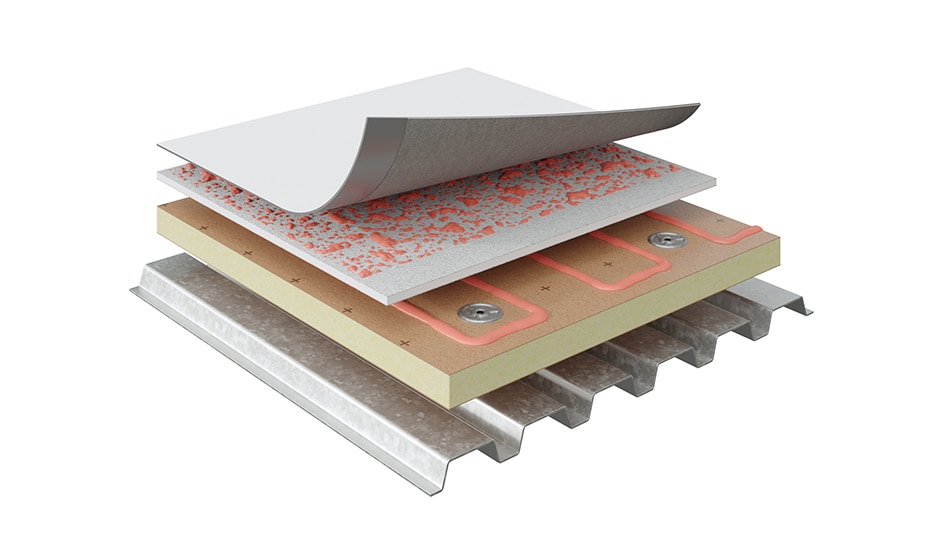
EnergyGuard™ HD, HD Plus y HD Barrier son tableros para cubierta de poliisocianurato de alta densidad que aportan resistencia y protección. Con un peso de tan solo 11 a 13 libras por tablero de 4' x 8', pesan una fracción de lo que pesan los tableros de yeso. GAF también colabora con proveedores externos para garantizar que dispongas de una amplia gama de opciones de tableros para cubierta para tu proyecto.
Descubre los sistemas contra granizo de GAF
Diseñados para brindar protección contra daños por granizo y mantener seguras las estructuras y sus ocupantes.
Enlaces rápidos a documentos de sostenibilidad
GAF puede proporcionar divulgaciones y certificaciones específicas de los productos de terceros, las cuales pueden contribuir con varios de los sistemas populares de calificación de edificios ecológicos como LEED, The Living Building Challenge v4 y Well Building Certification (Well v2). Spec Advisor ahora incluye información que avala a LEED v5 y Green Globes.

Ver proyectos de techo termoplástico
Mira cómo los productos de GAF superan diversos desafíos de techado
¿Por qué elegir los tableros para cubierta de poliisocianurato?
Valor R superior
El valor R de 2.5 es superior al de cualquier otro tipo de tablero para cubierta que no sea de poliisocianurato.
Ligeros y duraderos
Con un peso de tan solo 11 a 13 libras por tablero de 4' x 8', pesan una fracción de lo que pesan los tableros de yeso
Artículos relacionados del blog sobre tableros para cubierta

Sistemas de techos comerciales: Un resumen de 3 materiales
Techos comerciales
La elección del sistema de techo comercial adecuado depende de encontrar el equilibrio adecuado entre la durabilidad, el costo y los requisitos del edificio. Este resumen analiza los materiales TPO, PVC y EPDM, detallando cómo se comporta cada uno de ellos ante la exposición a los rayos UV, su resistencia química y su instalación. Comprender estas opciones fundamentales ayuda a los contratistas a elegir la solución más eficaz para cualquier edificio comercial.
Por Karen L. Edwards
17 de septiembre de 2021

Minimización de las interrupciones al reparar techos en escuelas y hospitales
Techos comerciales
La reparación de los techos de colegios y hospitales requiere un enfoque estratégico para minimizar el ruido, los olores y las interferencias logísticas. Al elegir materiales de bajo olor y programar los trabajos de mayor impacto fuera del horario de uso, los contratistas pueden garantizar un entorno seguro para los alumnos y los pacientes. Dar prioridad a una comunicación clara y a un equipamiento especializado garantiza que los servicios esenciales continúen sin interrupciones.
Por Dawn Killough
30 de agosto de 2024

Puentes térmicos en sujetadores de techo: por qué la industria debería prestar atención
Ciencia de la construcción
La rehabilitación de un techo comercial mediante revestimientos de protección supone una alternativa económica a su reemplazo, ya que permite sellar las fugas y prolongar la vida útil del sistema. Estos revestimientos mejoran la eficiencia energética al reflejar los rayos ultravioleta (UV) y ofrecen una barrera continua contra los elementos climáticos, lo que permite a los propietarios de los edificios revitalizar sus activos y reducir al mínimo el tiempo de inactividad operativa.
Por Elizabeth Grant
17 de noviembre de 2023
Preguntas frecuentes
Los tableros para cubiertas pueden ser componentes importantes de los ensamblajes de techos comerciales. Pueden aumentar la resiliencia y la durabilidad del techo, contribuyendo a que resista mejor la exposición al medio ambiente, la fuerza del viento y el desgaste a largo plazo. En ciertas circunstancias, los tableros para cubiertas pueden ser absolutamente esenciales para la vida útil de un sistema de techo. Obtén más información en el blog Roof Views.
A la hora de elegir entre tableros para cubierta de poliisocianurato de alta densidad y tablero para cubierta de yeso, hay que tener en cuenta tres aspectos básicos de comparación:
Un techo más ligero supone menos esfuerzo para tu equipo
Los tableros para cubierta de poliisocianurato de alta densidad pesan menos de la mitad por unidad que los tableros para cubierta de yeso, lo que permite un embalaje más eficiente (resulta práctico empaquetarlos de a dos), una manipulación más rápida con grúa y una mayor capacidad de carga en los camiones.
Con menos de la mitad del peso por tablero para cubierta de yeso de ¼", y tan solo 1/10 del peso por tablero para cubierta de yeso de ⅝", los tableros de cubierta de poliisocianurato de alta densidad pueden reducir la carga permanente en el techo, contribuyendo así a una posible reducción de los costos estructurales.
Y eso no es todo. Con un peso de entre 11 y 13 libras por tablero para cubierta de 4' x 8', el poliisocianurato de alta densidad es fácil de manejar por una sola persona. Los tableros para cubierta de yeso pesan hasta 100 lb. cada una, por lo que, por motivos de seguridad, se necesitan dos personas por placa.
Por último, los palés con tableros para cubierta de poliisocianurato de alta densidad no requieren desmontarse para distribuir el peso, como ocurre con los palés de yeso, lo que supone un ahorro de tiempo y mano de obra.
Añade aislamiento a tu resistencia a los impactos
Elegir un tablero para cubierta de poliisocianurato de alta densidad en lugar de un tablero para cubierta de yeso aporta al techo un valor R de 2.5, lo que supone 5 veces el valor de aislamiento del tablero de yeso. Dependiendo de las especificaciones, ese valor R adicional puede suponer la diferencia entre añadir una capa completa de aislante de poliisocianurato o poder utilizar una capa más fina de este material, lo que permite ahorrar costos. En proyectos en los que una resistencia a la compresión de 80 a 140 psi sea suficiente para satisfacer los requisitos estructurales y de resistencia a los impactos, la incorporación de un valor R de 2.5 puede suponer un ahorro significativo en los costos del aislante.
El valor R de 2.5 de un tablero para cubierta de poliisocianurato de alta densidad es mucho más que un simple complemento. Cuando se calcula dentro de los objetivos generales de la instalación de su techo, una capa de tablero para cubierta con valor R de 2.5 brinda la flexibilidad de seleccionar tableros de poliisocianurato más delgados para las capas inferiores sin dejar de lograr el valor de aislante deseado.
Tomemos, por ejemplo, una especificación del valor R de 30:
- Para elegir un tablero para cubierta de yeso, se necesitarían dos (2) capas de paneles Iso de 2.6", cada una con un valor R de 15. El yeso no aporta prácticamente nada (valor R de .5).
- Elegir un tablero para cubierta de poliisocianurato de alta densidad (valor R de 2.5), te permite utilizar un (1) capa de tableros de 2.6" (valor R de 15) y una segunda capa de paneles Iso de 2.2" (valor R de 12.6). Dependiendo del tamaño del techo, el ahorro que se consigue al sustituir la segunda capa ISO de 2.6" por una de 2.2" puede ser bastante considerable. Incluso un techo de 500 cuadrados podría suponer un ahorro de miles.
PSI versus productividad: evalúa la oportunidad
Si bien algunos techos son aptos para un tablero para cubierta con una resistencia de cientos de psi —para alcanzar la clasificación VSH requerida o para soportar cargas pesadas específicas, como espacios de ocio o grandes instalaciones de sistema de calefacción, ventilación y aire acondicionado (HVAC) o energía solar—, muchos techos solo requieren una clasificación SH y no se les debe instalar equipos pesado. Para esos techos, es importante considerar las ventajas de utilizar un panel de poliisocianurato de alta densidad más ligero.
| Yeso | Poliisocianurato de alta densidad | |
| Fácil de manejar | No | Sí |
| Requiere herramientas eléctricas para cortar | Sí | No |
| FM para granizo severo | Sí | Sí |
| FM para granizo muy severo | Sí | No |
| Valor R para ½" | .5 (promedio) | 2.5 |
| Peso por cuadrado (½") | 200 - 275 lb. | 38 lb. |
| Cuadrados por carga de camión (½") | < 250 | > 700 |
| Camiones por 1000 cuadrados | 6 | 2 |
Nota: Los valores indicados son aproximados y están sujetos a las variaciones normales de fabricación. Estos valores no están garantizados y se brindan únicamente como guía.
EnergyGuard HD Barrier y EnergyGuard NH HD Barrier pueden alcanzar la clasificación ANSI/UL 790 Clase A de resistencia al fuego para techos sobre plataformas combustibles. Consulta las hojas de datos individuales para obtener información.