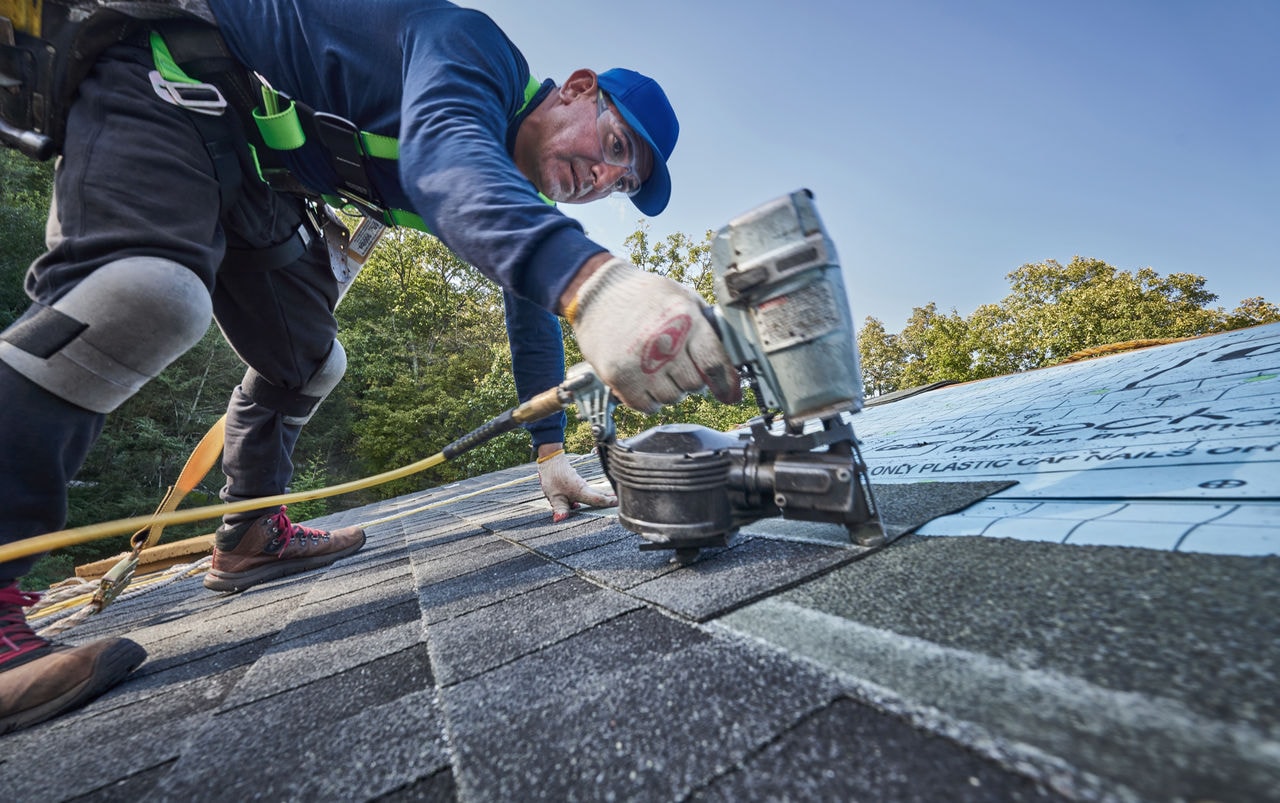
Si tienes un techo viejo o estás lidiando con goteras repentinas, tal vez te preguntes si es mejor repararlo o reemplazarlo. GAF tiene recomendaciones y consejos para que tomar la decisión entre reparación o reemplazo sea más fácil.
Los factores más importantes en esta decisión incluyen la antigüedad de tu techo, el alcance del daño, su historial de reparaciones y el costo comparativo entre arreglarlo o empezar de cero. Usa esta guía para decidir cuál es la mejor opción para tu hogar.
¿Cuántos años tiene tu techo?
Al elegir entre reemplazar o reparar, considera la antigüedad. ¿Tu techo tiene menos de 15 años o más de 15? Si tiene más y muestra signos de daño, como tejas faltantes o humedad, reemplazarlo puede ser la mejor opción en términos financieros. Si tiene menos de 15 años y presenta daños menores, repararlo puede ser una decisión inteligente, ya que todavía tiene vida útil. De todos modos, la edad no es el único factor, aunque sí uno de los más importantes.
Señales de daños en el techo
Antes de tomar una decisión, evalúa tu techo en busca de problemas:
Las tejas faltantes o deformadas por el clima son fáciles de reemplazar
Las manchas de agua en paredes o techos después de una tormenta pueden indicar filtraciones pequeñas, más económicas de reparar
El moho se puede tratar por secciones si es pequeño, pero si se extendió mucho, lo mejor es cambiarlo
Los hundimientos en el techo pueden indicar problemas estructurales y probablemente se requiera un reemplazo
Pérdida visible de gránulos: las tejas se desgastan con el tiempo y pueden quedar "peladas", lo que vuelve al techo más vulnerable y evidencia envejecimiento
Si tu techo muestra señales de daño, es importante actuar antes de que empeore. Reparaciones pequeñas hechas a tiempo pueden prolongar su vida útil.
Lista de verificación para inspecciones de techos residenciales
Antes de decidir si reemplazar o no, es buena idea que un contratista certificado por GAF inspeccione tu techo. Hacer una inspección por tu cuenta es arriesgado y requiere que tomes medidas de seguridad, así que considera recurrir a un profesional.
Revisa esta lista de verificación con tu empresa de techado para evaluar el estado de tu techo:
Inspeccionar canaletas por daños u obstrucciones
Revisar paredes exteriores en busca de daños por agua
Verificar que los remates y bordes estén bien asegurados
Buscar tejas agrietadas o deformadas
Inspeccionar presencia de musgo o moho
Revisar los remates metálicos alrededor de las chimeneas o claraboyas para detectar posibles daños o fugas
Si tienes un ático, revisa si hay signos de moho o enmohecimiento y comprueba que la ventilación sea adecuada.
Dos reglas para comparar costos
Usa la calculadora de costos "reparar vs. reemplazar"
Si la reparación cuesta más del 25 % de un techo nuevo, conviene reemplazar. De lo contrario, corres el riesgo de reparar y después tener que reemplazarlo igual.
Considera la regla del 30 %
¿El 30 % o más del techo está dañado? Es hora de reemplazarlo. Se trata de una gran superficie del techo para embarcarte en una reparación. Si es inferior al 30 %, la reparación es una opción razonable siempre y cuando tu techo tenga 15 años o menos y no haya sido objeto de reparaciones importantes en el pasado ni presente problemas graves, como moho o fallas estructurales.
¿Cuánto debería durar un techo?
La vida útil depende del material. Esto es lo que, por lo general, puedes esperar:
El asfalto dura entre 20-30 años con tejas de tres lengüetas, o entre 30-50 años con tejas arquitectónicas
La arcilla o el concreto, cuando se utilizan en entornos cálidos, pueden durar 50-100 años
Los techos planos pueden durar 15-30 años
Los techos metálicos duran en promedio 40-70 años
Los techos de pizarra son duraderos (60-150 años), pero son muy caros
Las tejas de madera duran 30 años con un buen mantenimiento
Elegir al profesional adecuado
Elegir un contratista es tan importante como elegir las tejas. Cuando trabajas con un contratista certificado por GAF, te asocias con un profesional que fue evaluado, cuenta con seguro y está capacitado en las últimas técnicas de instalación. Más allá de evitar los riesgos de las reparaciones por cuenta propia, un experto certificado garantiza que tu techo se instale como un sistema completo e integrado, lo que protege tu garantía y el valor de reventa a largo plazo de tu vivienda.
Ten en cuenta estos consejos a la hora de contratar a un techador:
Licencias: ¿cuenta con las credenciales y las licencias pertinentes de los fabricantes de materiales para techos?
Experiencia: ¿tu techador trabajó en otros techos con problemas similares? ¿Fue muy recomendado?
Seguros: ¿está debidamente asegurado en caso de accidente?
¿Cuánto tiempo tardará en realizar la reparación o el reemplazo?
Las reparaciones de techos tardan entre unas horas y 3 días, mientras que el reemplazo de un techo puede llevar entre 2 y 5 días.
Reparar o reemplazar: guía rápida
Antigüedad/años | Estado/tamaño del problema | Reparaciones anteriores | Costos | Resultado |
Menos de 15 años | Bueno, con pequeños problemas como tejas curvadas / Menos del 30 % de la superficie del techo | Ninguna o 1 reparación menor | 25 % menos que un techo nuevo | REPARAR |
Menos de 15 años | Moderado o grave, como moho y problemas estructurales / Más del 30 % de la superficie del techo | Ninguna o muy pocas reparaciones | 25 % del costo de un techo nuevo | REEMPLAZAR |
Más de 15 años | Bueno, con pequeños problemas como tejas curvadas / Menos del 30 % de la superficie del techo | Ninguna o 1 reparación menor | 25 % menos que un techo nuevo | REPARAR |
Más de 15 años | Moderado o grave, como moho y problemas estructurales / Más del 30 % de la superficie del techo | Ninguna o muy pocas reparaciones | 25 % del costo de un techo nuevo | REEMPLAZAR |
A veces, empezar de cero es la opción más responsable. Incluso si el techo parece estar en condiciones aceptables, si el costo de reparar supera el 25 % del reemplazo total, probablemente ya no convenga seguir arreglando. En lugar de gastar $1,100 o más en reparaciones recurrentes, un reemplazo completo garantiza que toda tu casa esté protegida por un sistema unificado y con garantía, lo que te libera del ciclo de "reparar y volver a reparar".
Independientemente de si estás reparando una pequeña gotera para prolongar la vida útil de tu techo o invirtiendo en un sistema de techo completo de GAF, lo más importante es que la instalación sea de calidad. No dejes la protección de tu hogar al azar. Comunícate con un contratista certificado por GAF* en tu área para obtener una evaluación profesional y tener la certeza de que tu techo está listo para resistir cualquier inclemencia del clima.
*Los contratistas inscritos en los programas de certificación de GAF no son empleados ni agentes de GAF, y GAF no controla ni supervisa de otro modo estas empresas independientes. Los contratistas pueden recibir beneficios, como puntos y descuentos de recompensa por lealtad en herramientas de comercialización de GAF por participar en el programa y ofrecer a GAF garantías mejoradas, que requieren el uso de una cantidad mínima de productos de GAF. Tus negocios con un contratista y cualquier servicio que este te preste están sujetos a los Términos de uso para contratistas de GAF.
