La sostenibilidad de la fabricación es una prioridad de primer orden para GAF. En 2022, la empresa anunció sus objetivos globales 2030 para "centrarse en mejoras operativas, la transparencia de los productos y la introducción de la economía circular en la industria de las tejas asfálticas".
Con el objetivo de impulsar un cambio positivo y teniendo en cuenta el impacto a largo plazo de su actividad en el planeta, GAF identificó varios objetivos, entre los que se incluyen:
Evitar que 1 millones de toneladas de materiales para techos terminen en los vertederos y, al mismo tiempo, integrar materiales reciclados de tejas en nuevos productos de tejas
Evitar que el 80 % de los residuos de la fabricación terminen en los vertederos, reciclar todos los restos de tejas y de TPO que se generan durante el proceso de fabricación, y reciclar o reutilizar centros y sobrantes de láminas de fibra de vidrio
Reducir el carbono incorporado y el carbono de las operaciones a lo largo de todo el proceso de fabricación y funcionamiento
Obtener Declaraciones de Productos Medioambientales para sus productos principales, realizar evaluaciones del ciclo de vida y generar 2.5 GW de energía a partir de techos solares en colaboración con GAF Energy
Alcanzar estos objetivos requiere tiempo, recursos, innovación e ingenio, todo respaldado por un equipo que se esfuerza por construir un mundo mejor. Cada sucursal de GAF trabaja para cumplir los objetivos de la empresa. Al repasar los avances obtenidos en 2023, destacamos algunos logros notables que permiten a la empresa acercarse cada vez más a la sostenibilidad total en la fabricación.
Fabricación residencial
La planta de fabricación de tejas de GAF en Mt. Vernon, Indiana, trabajó para lograr operaciones sostenibles mediante importantes iniciativas de reciclaje. El equipo puso en marcha un centro de reciclaje de tejas que, según las estimaciones, evitará que miles de toneladas de tejas de asfalto terminen en los vertederos cada año. Esto permitió ahorrar miles de dólares en tasas de eliminación de residuos y costos de transporte.
El personal de Mt. Vernon encontró formas creativas de evitar que los residuos complejos fueran a parar a los vertederos, entre ellas colaborar con un campo de golf local que podía aprovechar la arena residual de la planta. El equipo puso en marcha un programa interno de reciclaje que incluye cartón y materiales de embalaje, lo que permitió aumentar su índice de diversificación de residuos.
Fabricación comercial
En la planta de Gainesville, Texas, donde se fabrican los productos de TPO y poliisocianurato, los miembros del equipo obtuvieron la primera certificación de separación de residuos del área para los flujos de residuos de ambos productos. Además, obtuvieron una certificación de contenido reciclado para cada producto.
La planta puso en marcha un programa piloto con una empresa de reciclaje de plásticos para reprocesar el material de revestimiento de TPO con el fin de reutilizarlo en la fabricación de material nuevo. El reciclaje y la reutilización evitarán que miles de toneladas de residuos terminen en los vertederos y permitirán utilizar materiales reciclados en la fabricación de TPO flexible para tapajuntas.
La planta también elaboró un programa con una empresa local de reciclaje que actúa como proveedor único para la recolección de sus palés, cajas de cartón grandes, láminas de revestimiento, papel y plásticos.
Líderes en sostenibilidad
Estos avances no serían posibles sin las personas detrás de las iniciativas. GAF tiene el honor de destacar a estas personas que se esforzaron al máximo para alcanzar los objetivos de sostenibilidad de la empresa.
Ben Anselman
Como miembro del equipo de Mt. Vernon, Anselman desempeñó un papel fundamental en la puesta en marcha del principal programa de reciclaje de la planta. Impulsó las reparaciones de una enfardadora existente y estableció un programa para el reciclaje de los sacos industriales. Su creatividad motivó la colaboración con el campo de golf local para evitar que los residuos de áridos fueran a parar a los vertederos. Además, fue el impulsor del proyecto del punto de reciclaje de tejas y reutilizó una compactadora ya existente para reactivar una iniciativa de reciclaje de cartón.
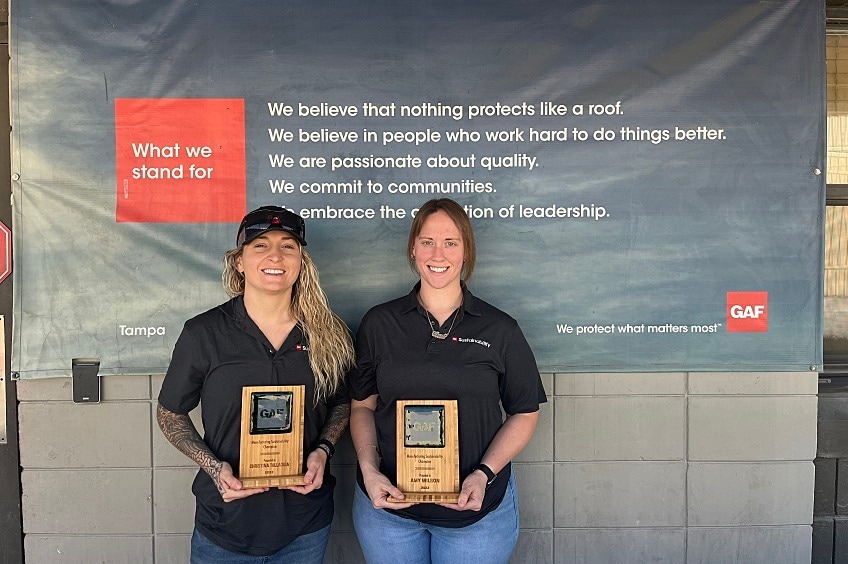
Christina Talladira y Amy Wilson
Estas compañeras de equipo dirigen el principal programa de reciclaje de la planta de fabricación de Tampa, Florida. Trabajaron juntas para poner en marcha programas de reciclaje de agregados y tejas con la empresa local de reciclaje. Talladira y Wilson buscan constantemente formas de desviar los flujos de residuos de los vertederos. Además, se encargan de las tareas administrativas relacionadas con estos programas, como la programación de los transportes y el seguimiento de los residuos.
Jeremy Tisdale
En la planta de Tuscaloosa, Alabama, Tisdale tomó la iniciativa de mejorar su programa central de reciclaje y puso en marcha un programa de reciclaje de cartón. También impulsó una prueba piloto de empacado para los residuos de centros y sobrantes de láminas de vidrio, y elaboró procedimientos operativos estándar y un análisis de seguridad laboral. Además, ideó una iniciativa para evitar que los residuos plásticos de la planta fueran a parar a los vertederos. Creó un programa para guardar los residuos de embalaje de film estirable y paquetes de tejas en cajas Gaylord y, posteriormente, empacarlos cada vez que la planta tiene un tiempo de inactividad.
Pete Weyrens
En Gainesville, Texas, Weyrens es el impulsor de las iniciativas de reciclaje de la planta y se ocupa de establecer relaciones con la empresa de reciclaje local. También organizó las pruebas con el material flexible TPO para revestimientos. Esta iniciativa evitará que miles de toneladas de residuos terminen en los vertederos y utilizará materiales reciclados para fabricar TPO flexible para tapajuntas.
Leslie Peels
Después de que la planta de Cumming, Georgia, registrara una disminución en su tasa de desviación de residuos respecto al año anterior, Peels intervino para revertir esa tendencia. La sede de Cumming, que encabezó la iniciativa para separar los materiales reciclables de los residuos comunes, logró un aumento notable en la reducción de los residuos que terminaban en el vertedero. Peels también sentó un precedente en la recopilación y el análisis de datos para garantizar que la planta mantuviera el rumbo hacia sus objetivos de sostenibilidad.
TJ Jenkins y Todd Winstead
Jenkins y Winstead representan al equipo de TPO en la planta de fabricación de Mt. Vernon. Al trabajar en equipo, aprovecharon sus conocimientos y experiencia en el proceso de fabricación de TPO para obtener las certificaciones de contenido reciclado de la planta. Además, encontraron una forma de desviar el cloruro de calcio de los vertederos locales y siguen colaborando estrechamente con el equipo de sostenibilidad para apoyar las iniciativas de desviación de residuos.
Compromiso con la sostenibilidad
GAF se compromete a "proteger lo que más importa", y eso incluye a las personas, las comunidades y el planeta. Su compromiso con la sostenibilidad es una oportunidad para invertir en un futuro saludable para todos. Para obtener más información sobre ese compromiso, consulta su informe de sostenibilidad.
