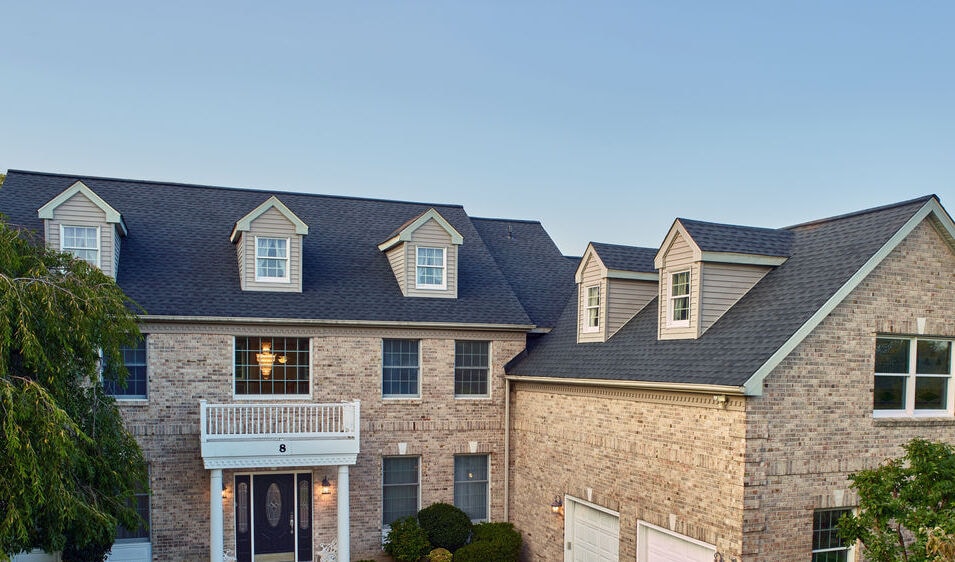
En los EE. UU., los tormentas de granizo generan miles de millones de dólares en daños materiales todos los años. En 2024, el granizo dañino afectó a más de 500,000 hogares, con un costo de reconstrucción combinado de $160 mil millones. Casi la mitad de todas las reclamaciones de seguros residenciales están relacionadas con daños por granizo, y la mayoría involucra techos. Como propietario, es importante que conozcas tu nivel de riesgo y protejas tu hogar con el mejor techo.
Las clasificaciones de las tejas de techos abarcan desde clase 1 hasta clase 4 según la resistencia a los impactos; y la clase 3 y la clase 4 son las más efectivas a la hora de soportar los daños por granizo. Al comparar las tejas de clase 3 con las tejas de clase 4, comprender el desempeño, los costos y los posibles beneficios de seguros pueden ayudarte a elegir correctamente para tu hogar.
Información sobre clasificaciones de resistencia a los impactos de tejas
El grado de resistencia a los impactos de las tejas para techos se prueba simulando el impacto del granizo y, a continuación, registrando y clasificando los resultados. Underwriters Laboratories (UL), una entidad de prueba y certificación global, desarrolló el estándar UL 2218, que utiliza bolas de acero de diversos tamaños y las deja caer dos veces sobre tejas instaladas, desde alturas específicas. A continuación, se examinan las tejas para detectar indicios de grietas visibles. Según en qué momento se observa agrietamiento o si efectivamente se observa agrietamiento, las clasificaciones de las tejas abarcan desde la clase 1 hasta la clase 4, y la clase 4 es la más alta.
La siguiente tabla muestra los requisitos de resistencia a impactos según UL 2218 para las tejas de las clases 1 a 4:
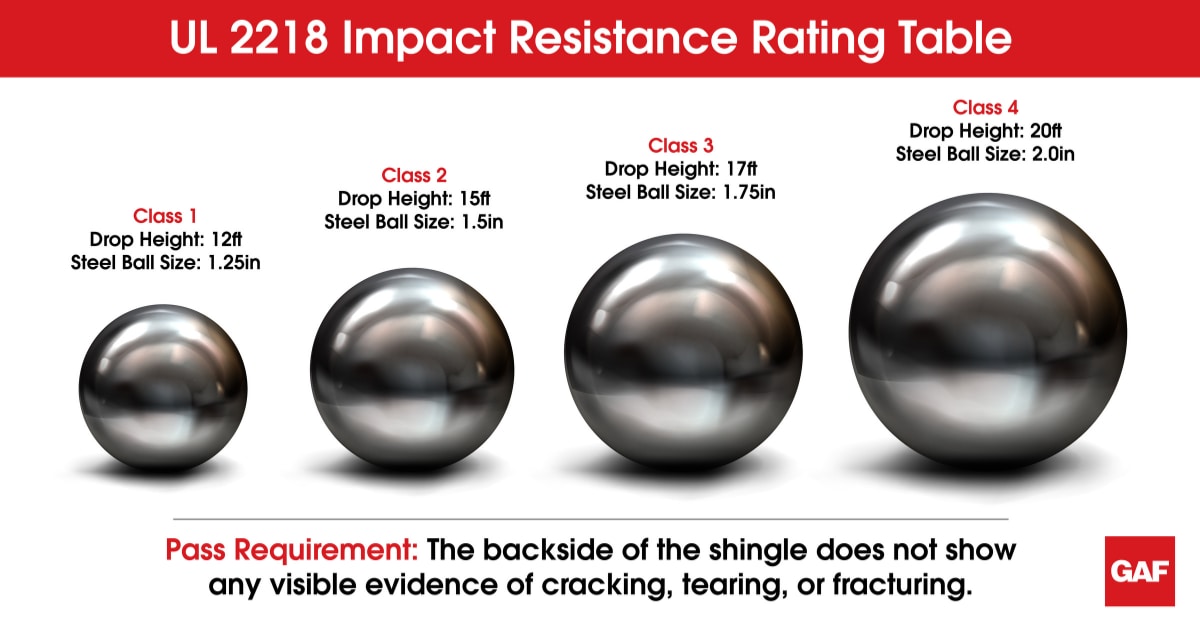
La clase 1 se prueba a una altura de caída de 12 ft, con un tamaño de bola de acero de 1.25 in
La clase 2 se prueba a una altura de caída de 15 ft, con un tamaño de bola de acero de 1.5 in
La clase 3 se prueba a una altura de caída de 17 ft, con un tamaño de bola de acero de 1.75 in
La clase 4 se prueba a una altura de caída de 20 ft, con una bola de acero de 2.0 in
Para superar todas las pruebas, la parte posterior de la teja no puede exhibir indicios visibles de rotura, agrietamiento ni fractura.
¿Las tejas de clase 3 son resistentes a los impactos?
Dado que la clase 4 es la más alta, ¿también se considera que las tejas de clase 3 son resistentes a los impactos? Absolutamente.
Si bien casi dos tercios del territorio de los EE. UU. pueden verse afectados por tormentas de granizo, estas suelen ser de intensidad y severidad variables según la ubicación. La FEMA ha establecido un Mapa del Índice de Riesgo Nacional que clasifica el riesgo relativo de una comunidad en relación con el granizo, en comparación con el resto de los Estados Unidos. Al evaluar las tejas de clase 3 con las tejas de clase 4, la clase 3 soporta impactos de granizo moderado, por lo que ofrece a los propietarios de esas áreas del país un equilibrio entre asequibilidad y protección.
Tejas para techos de clase 3: especificaciones y desempeño
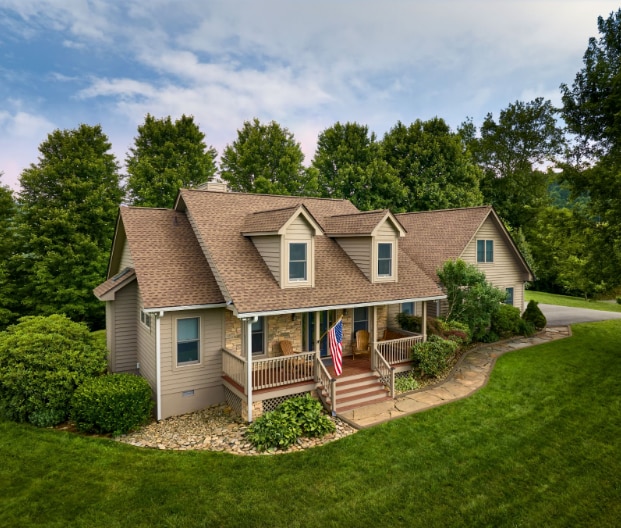
Las tejas de clase 3 de GAF se fabrican con un núcleo de lámina de fibra de vidrio, una capa de asfalto resiliente y una superficie granular, y están diseñadas para absorber el impacto de granizo moderado.
GAF fabrica diversas tejas de clase 3 con certificación UL 2218, que incluyen las siguientes:
- Timberline HDZ®
- Timberline HDZ® RS
- Camelot II®
- Woodland®
- Slateline®
- Grand Sequoia®
Para entrar en la categoría de clase 3, estas tejas han soportado el impacto de una bola de acero de 1.75 pulgadas, soltada desde una altura de 17 pies, sin agrietarse. Para tu techo, esto se traduce en una mayor protección y una mayor vida útil del techo que con las tejas estándares.
Las tejas de clase 3 de GAF se recomiendan a los residentes de zonas de granizo moderado que buscan asequibilidad y desempeño y valoran la gama de opciones estéticas ofrecidas por la línea de productos de clase 3 de GAF.
Tejas de clase 4: protección premium
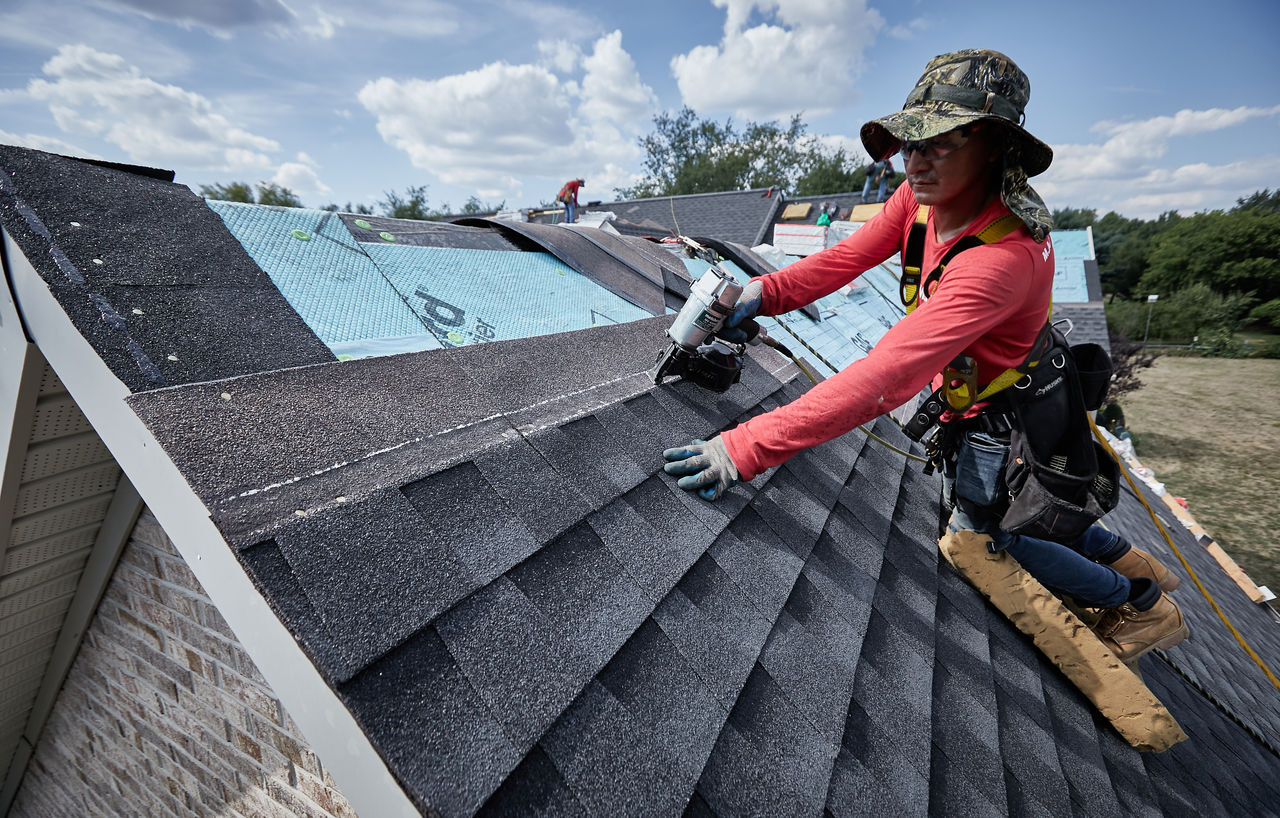
Las tejas de clase 4 de GAF representan el nivel de certificación más alto de resistencia a los impactos. Cumplen los requisitos de la clase 4 de UL 2218, lo que significa que soportaron el impacto de una bola de acero de 2 pulgadas, desde una altura de 20 pies, sin agrietarse.
Las tejas de clase 4 de GAF se fabrican con asfalto modificado con polímeros de estireno-butadieno-estireno (SBS), con un núcleo de fibra de vidrio reforzado y una superficie granular. Esta combinación contribuye a una mayor resistencia y flexibilidad, que les permite curvarse sin romperse y resistir daños por perforaciones o la pérdida de gránulos de la superficie.
Las tejas para techos de clase 4 de GAF que cumplen esta norma son:
- Timberline® AS II
- Timberline® UHDZ
- Grand Sequoia® AS
Las tejas serie ArmorShield® de GAF se recomiendan para zonas de granizo de alto riesgo. Debido a que el viento también es un factor en áreas con tormentas severas, estas ofrecen un desempeño excelente contra viento, de conformidad con la clase F de UL, la más alta clasificación de viento.
Cuando se instalan con la combinación requerida de accesorios GAF, las tejas Timberline® AS II son elegibles para una garantía limitada contra vientos WindProven™ de 15 años, con una opción de protección contra velocidad del viento infinita.
Tejas de clase 3 vs. tejas de clase 4: una comparación
A continuación, se detallan los puntos principales que deben considerar al comparar las tejas de clase 3 vs. las tejas de clase 4:
Estructura
- Las tejas de clase 3 de GAF están hechas con una formulación de asfalto con más grosor que las tejas estándares e incorporan un núcleo de lámina de fibra de vidrio para incrementar la resistencia.
- Las tejas de clase 4 de GAF, debido a su construcción de asfalto modificado con SBS y núcleo de lámina de fibra de vidrio reforzado tienen más grosor, y son más pesadas y resilientes que las tejas de clase 3.
Durabilidad y vida útil
- Tanto las tejas de clase 3 como las de clase 4 de GAF ofrecen una garantía limitada de por vida en cuanto a defectos del fabricante y una garantía limitada de protección contra las algas StainGuard Plus™ de 25 años, lo que garantiza que tu techo continúe siendo no solo duradero, sino también hermoso, en los años venideros. Tienen una clasificación A de resistencia al fuego de UL, han sido aprobadas por el Código de Construcción de Florida y están incluidas en la lista del Departamento de Seguros del estado de Tejas.
- Por lo general, las tejas de clase 3 de GAF tienen una vida útil de 20 a 30 años.
- La vida útil de las tejas de clase 4 de GAF suele superar los 30 a 35 años.
Beneficios de seguros
- Las aseguradoras en determinadas ubicaciones pueden ofrecer descuentos para techos con tejas con certificaciones de clase 3 y clase 4. Los descuentos típicos para la clase 3 pueden variar entre el 5 % y el 10 %, mientras que las tejas de clase 4 pueden reunir los requisitos para reducciones en las primas de entre el 10 % y el 25 %.
- Los descuentos, si se ofrecen, variarán según la aseguradora y la ubicación.
- Para verificar la elegibilidad, consulta a tu aseguradora. Si tu hogar reúne los requisitos, se te pedirá que suministres documentación de tu contratista de techado y, posiblemente, un informe detallado de un inspector de techos certificado.
Análisis de costos y ROI
- Las tejas de clase 3 tienen un costo inicial más bajo que las tejas de clase 4, proporcionan una protección confiable en zonas con granizo moderado y podrían permitir obtener ahorros en seguros de propietarios.
- Las tejas de clase 4 representan una inversión inicial más alta, y suelen costar alrededor del 10 % al 20 % más que las tejas de clase 3. Si vives en una región con alto riesgo de granizo, el costo adicional podría compensarse con los posibles beneficios a largo plazo de menos reparaciones, una vida útil del techo más prolongada, más descuentos significativos en seguros y un mayor valor de reventa de los hogares.
La decisión correcta para tu hogar
Elegir tejas de clase 3 o de clase 4 para tu hogar es una decisión importante que dependerá de:
- Zona climática: la clase 4 se recomienda para zonas de granizo de alto riesgo. La clase 3 es adecuada para zonas de riesgo moderado a relativamente bajo.
- Presupuesto: las tejas de clase 3 ofrecen una protección moderada a un costo menor. La protección premium de clase 4 ofrece ahorros posibles a largo plazo que podrían compensar la inversión inicial más alta.
- Seguro: la clase 4 podría reunir los requisitos para descuentos de seguros más altos que los de la clase 3.
- Códigos locales: es posible que algunas jurisdicciones en áreas de alto riesgo requieran tejas de clase 4.
Debido a que un techo resistente a los impactos solo puede ser tan bueno como la calidad de su instalación, GAF recomienda elegir un contratista Master Elite® de GAF* para instalar tu techo con tejas de clase 3 o clase 4. Los contratistas Master Elite® superan adiestramientos y certificaciones rigurosas y pueden ofrecer garantías extendidas para tu techo. Pueden asesorarte en relación con el mejor techo según tu ubicación, presupuesto y requisitos de códigos.
Conoce más acerca de los productos para techos resistentes a los impactos de GAF o encuentra un contratista Master Elite® certificado aquí.
*Los contratistas inscritos en los programas de certificación de GAF no son empleados ni agentes de GAF, y GAF no controla ni supervisa de otro modo estas empresas independientes. Los contratistas pueden recibir beneficios, como puntos y descuentos de recompensa por lealtad en herramientas de comercialización de GAF por participar en el programa y ofrecer a GAF garantías mejoradas, que requieren el uso de una cantidad mínima de productos de GAF. Tus negocios con un contratista y cualquier servicio que este te preste están sujetos a los Términos de uso para contratistas de GAF.
