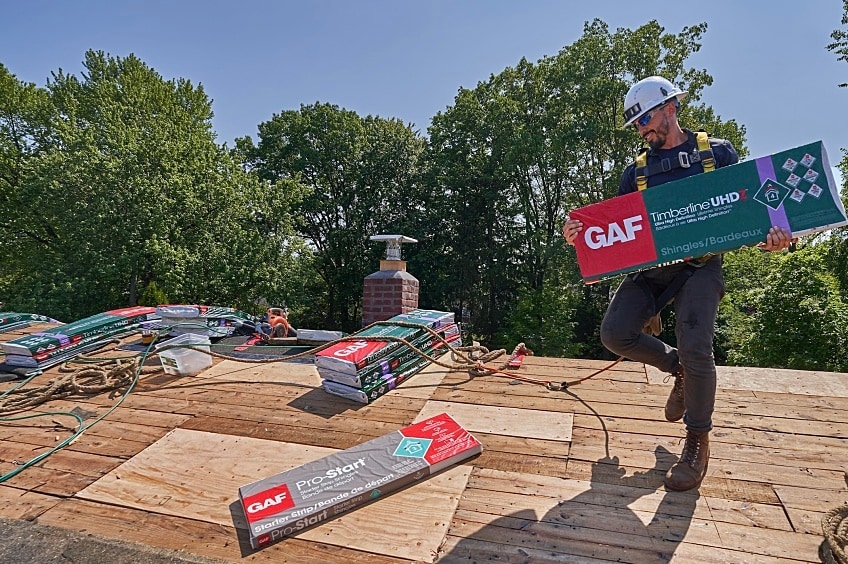
Combinar tejas durante reparaciones de techos es más fácil que nunca con los códigos de colores de tejas de GAF. Cuando se necesitan reparaciones, los clientes esperan que las tejas de repuesto se integren a la perfección con el techo existente. Y, en el caso de reemplazos totales de techos, los propietarios esperan un color uniforme en toda la instalación.
Los códigos de colores de tejas son un estándar industrial que ayuda a los contratistas a brindar resultados de alta calidad de forma eficiente, al eliminar el proceso de coincidencia de colores visual que demanda mucho tiempo y suele ser poco confiable. Incluso si visualmente parece que una teja coincide, no usar el código de color correcto podría generar variaciones sutiles que restan valor al aspecto general del techo.
Comprender los códigos de colores de tejas de GAF es la clave para lograr coincidencias exitosas y la felicidad de los propietarios después de instalaciones y reparaciones de techos.
¿Qué es un código de color?
Los códigos de colores son utilizados por fabricantes de techos para hacer un seguimiento de series de producción y de la información de color correspondiente. Debido a que los fabricantes suelen operar múltiples plantas, los códigos de colores de tejas garantizan que cada instalación utilice identificadores únicos que definen el color de la teja, la fecha de producción y la línea de empaque de cada paquete.
Los paquetes de tejas usados en un trabajo deben tener el mismo código de color impreso en el empaque para asegurarse de que coincidan. También deben tener fechas de fabricación lo más cercanas posibles, puesto que durante el almacenamiento de tejas nuevas pueden producirse manchas asfálticas temporales. Si bien esta cuestión estética no afecta el desempeño de las tejas, sí podría generar insatisfacción en los propietarios que no desean esperar el curado hasta obtener una apariencia uniforme.
Cómo descifrar códigos de colores de tejas
En el caso de tejas nuevas y empaquetadas, los contratistas pueden encontrar los códigos de colores impresos en los extremos de los paquetes. Un extremo del paquete tiene una tabla que contiene el nombre del color y el código del color, seguido de la fecha, la hora y la línea del paquete. Tiene este aspecto:
CHARCOAL | DA180B
07-25-2020 | 13:11 B
En el otro extremo del empaque, la tabla contiene solo el nombre y código del color, que se ve de la siguiente manera: CHARCOAL | DA180B
En los ejemplos a continuación, el color está deletreado, pero las letras y los números adicionales lo especifican aún más. "DA" podría indicar la línea de producto de la teja, como Timberline HDZ, y 180B es el código de color Charcoal en sí.
La fecha y la hora en la segunda fila son la clave para minimizar los matices y garantizar la uniformidad del color. La letra que está a continuación de la hora es el identificador de la planta. En el ejemplo a continuación, las tejas se fabricaron en la planta B.
Cuando las tejas no son nuevas o no están en su empaque original, los códigos de color pueden encontrarse en la parte posterior de la teja para fines de identificación y coincidencia de colores de forma adecuada.
Por qué son importantes los códigos de colores de tejas
Ya sea que estés realizando una reparación o una instalación nueva, es de vital importancia saber con certeza que los códigos, los nombres y las fechas de los colores coincidan para evitar matices y otras cuestiones estéticas.
Si el techo se instaló hace varios años, las tejas existentes habrán experimentado desgaste por exposición a la intemperie, pérdida de gránulos y una sutil decoloración que son normales en las tejas con el paso del tiempo. Debido a estos cambios naturales, una comparación visual para identificar el color no funcionará. Es por eso que hay un código de color de teja impreso en la parte posterior de cada teja.
El cumplimiento de la garantía es otro punto importante a considerar durante las reparaciones. Por lo general, para mantener la cobertura de la garantía, se debe usar la teja de GAF con la documentación oficial, que puede verificarse con el código de color correcto. Instalar tejas o colores incorrectos puede traer complicaciones en futuras reclamaciones en virtud de la garantía.
Cómo los códigos de colores de tejas eliminan futuros dolores de cabeza
Cuándo es ideal reparar techos
Cuando un propietario se comunica contigo para una inspección posterior a una tormenta o porque está experimentando una gotera, a menudo, el problema puede solucionarse reemplazando una pequeña cantidad de tejas en el área correspondiente. En este caso, la coincidencia de colores es realmente importante. Si bien la exposición a la intemperie causará algunas variaciones en el color, puedes acercarte lo más posible consultando el nombre y código del color impresos en la parte posterior de la teja y especificando esta información al pedir reposiciones. Sigue estos pasos para identificar la teja:
Levanta con cuidado una de las tejas existentes.
Busca el código impreso en la parte posterior de la teja y tómale una fotografía para consultarlo con facilidad.
Llama a tu proveedor e indícale el nombre de color exacto y el código.
Pide a tu proveedor que priorice paquetes con la fecha de producción más cercana posible o, como mínimo, el mismo código de color.
Al administrar existencias
Mantener colores de tejas de GAF populares a la mano para instalaciones o reparaciones puede ayudarte a completar el trabajo cumpliendo los plazos, pero no prestar atención a los códigos de color puede dar lugar a colores desiguales y cuestiones estéticas para el propietario.
Nunca mezcles tejas de distintos lotes, incluso si ambas tienen el mismo nombre de color. Si las tejas fueron fabricadas en dos plantas distintas, podrían tener ligeras diferencias de colores a causa de variaciones en las materias primas o los ajustes de las máquinas. Mezclar lotes puede generar insatisfacción en los propietarios y repeticiones costosas del trabajo.
Evita posibles faltas de coincidencia almacenando tus paquetes por código de color y, también, por fecha de producción. Al retirar tejas para un trabajo, usa siempre paquetes con códigos que coincidan y fechas de producción lo más cercanas posibles.
Sin adivinanzas
Al usar y comprender los códigos de colores de tejas de GAF, ya no tienes que adivinar o "determinar a ojo" al intentar hacer coincidir colores. Lo que antes era un juego de adivinanzas desafiante se ha convertido en un simple proceso científico.
Aplica este conocimiento para simplificar tu próximo trabajo, y para especificaciones técnicas detalladas, siempre consulta los documentos de GAF oficiales.
