Al comparar revestimientos de techos con reemplazos comerciales, puede que te preguntes lo siguiente: ¿puedo renovar mi techo o necesito reemplazarlo por completo?
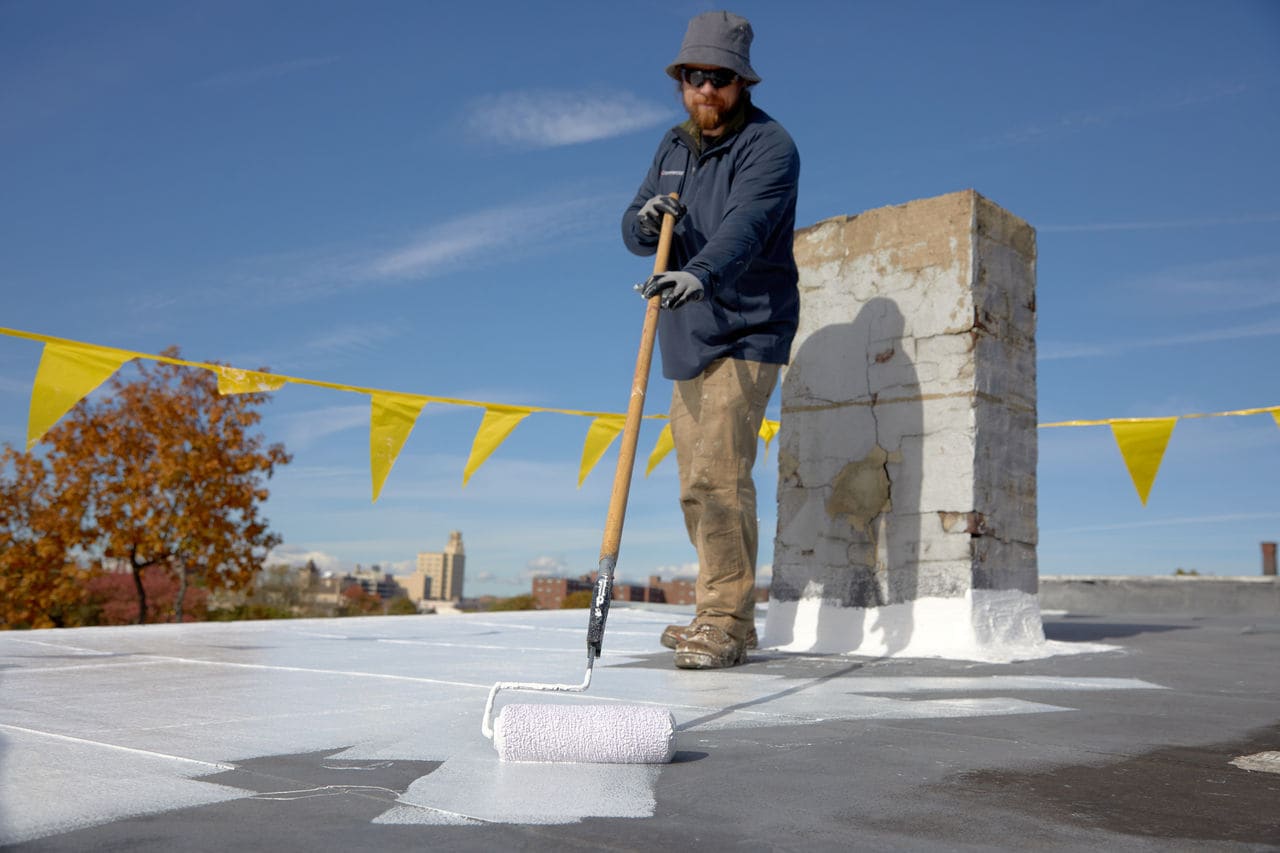
Los revestimientos de techos, a menudo llamados sistemas de techos con aplicación líquida, son sistemas de múltiples componentes que pueden formar una membrana sin fisuras sobre un techo de pendiente baja existente. Los revestimientos pueden ayudar a extender la vida útil de techos comerciales que siguen siendo estructuralmente sólidos sin tener que reemplazarlos por completo.
¿Pero es tu techo elegible para una solución de ese tipo? Aquí, compararemos los casos de uso, los beneficios y las consideraciones respecto de cada opción para que puedas discernir mejor cuál es la mejor para ti.
Cuál es la diferencia: revestimiento vs. reemplazo
Revestimiento para techos
Un revestimiento de techo consiste en una restauración de múltiples pasos sobre un techo existente. La preparación involucra abordar las reparaciones necesarias, retirar y reemplazar el sustrato saturado de humedad, reforzar las uniones, limpiar las superficies para garantizar la adhesión del sistema de revestimiento adecuado y aplicar un sistema de revestimiento sobre el techo de pendiente baja existente.
Los beneficios típicamente incluyen: menor costo, menos interrupciones y menos desperdicios por desprendimiento que en el caso de un reemplazo completo.
Reemplazo de techo comercial
El reemplazo de un techo comercial consiste en un proyecto de construcción de mayor envergadura que involucra retirar y reinstalar el conjunto de techado completo. Si tu techo existente es irreparable o está demasiado mojado, o si su restauración es demasiado riesgosa, es posible que debas reemplazarlo.
Cuándo optar por un revestimiento de techo o un reemplazo de techo
Opta por un revestimiento de techo en lugar de un reemplazo comercial si tu techo cumple los criterios adecuados y si es la mejor opción para tu propiedad. A largo plazo, añadir un revestimiento sobre un techo dañado o estructuralmente deteriorado puede costar más a los propietarios, por lo que es importante que un profesional de techado inspeccione el techo para guiarte en la decisión. De esta manera, proteges tu edificio, tu garantía y tu dinero.
Si tu techo comercial es un buen candidato, un revestimiento puede extender la vida útil del techo sin los costos más altos o las interrupciones inherentes a un desprendimiento completo.
Indicios de que tu techo es buen candidato para un revestimiento
1. El techo es estructuralmente sólido
Los revestimientos están previstos para proteger un techo de pendiente baja existente estructuralmente sólido. No están previstos para proteger un techo deteriorado.
Antes de optar por el revestimiento, asegúrate de que el sustrato y el conjunto del techo no sean irreparables. Comprueba que todos los daños o el desgaste hallados puedan repararse antes de aplicar el revestimiento.
2. El agua se drena correctamente
Algunos revestimientos pueden verse afectados por la acumulación de agua. Por lo general, los problemas de drenaje deben corregirse para garantizar el éxito del revestimiento.
3. Las filtraciones pueden resolverse
Los revestimientos pueden rellenar filtraciones por pequeños orificios, pero no están previstos como reparación de filtraciones importantes en techos. Las filtraciones existentes deben ser detectadas y reparadas, y se deben dejar secar antes de la aplicación del revestimiento.
4. La humedad es limitada
Las guías sobre techos con aplicación líquida de GAF indican analizar la humedad para detectar sustrato mojado que deba reemplazarse. Si el análisis de humedad revela la presencia de humedad en el 25 % o más del área del techo, puede que se considere un desprendimiento completo. El análisis también puede ser exigido por determinadas garantías y protecciones.
5. Quieres una mínima cantidad de interrupciones y desperdicios por desprendimiento
Los sistemas de revestimientos se aplican sobre un techo existente, lo que te permite evitar el trabajo y desecho adicionales inherentes a una reconstrucción completa. Esto puede ser beneficio desde el punto de vista presupuestario, operativo y de reducción de desperdicios.
Cuándo el reemplazo de un techo comercial es mejor que un revestimiento
A continuación, se detallan algunas señales de alerta que podrían indicar que un reemplazo es una inversión más sabia que un revestimiento:
- Humedad generalizada: aislante mojado o sustrato saturado de humedad en todo el sistema.
- Problemas estructurales: deterioro significativo de la plataforma base, falla sustancial del sustrato y otros factores que alteren la integridad estructural.
- Filtraciones persistentes y reiteradas: cuando las reparaciones no pueden resolver filtraciones persistentes, especialmente en múltiples áreas.
- Final de vida útil: un revestimiento no puede sumar años a un techo que ya ha cumplido su vida útil, de conformidad con el manual de techos con aplicación líquida de GAF. Por lo tanto, revestir un techo al final de su vida útil es como tirar dinero a la basura.
- Problemas de acumulación de agua: la acumulación de agua que no puede resolverse es una señal de alerta para la aplicación de revestimiento.
- Otros: cualquier otro problema de adherencia, humedad o detalles que no pueda resolverse para llevar la condición del techo a su estado inicial.
Costo de revestimiento de techo vs. reemplazo comercial: cómo comparar
Puede que los revestimientos cuesten menos que el reemplazo, pero las cifras solo tienen significancia cuando se comparan las mismas variables dentro del alcance del mismo proyecto.
Los factores que afectan el costo del revestimiento de techo incluyen:
- Tamaño del techo
- Cantidad de preparación del sustrato y reparaciones necesarias
- Sistema de revestimiento seleccionado
- Cantidad de capas y tasa de aplicación utilizada
- Costos de mano de obra para preparación e instalación
Los factores que afectan el costo del reemplazo incluyen:
- Desprendimiento y desechos
- Nuevos materiales, que posiblemente incluyen aislante, tableros, membrana, accesorios de tapajuntas y más
- Costos de instalación de mano de obra
- Tiempo de inactividad operativa o restricciones de logística
Asegúrate de preguntar a tu representante técnico de ventas de revestimientos de GAF y tus asesores financieros correspondientes para descubrir si eres elegible para posibles beneficios o diferencias impositivos.
Selección de revestimiento: si tu techo es elegible
Si tu techo es elegible, trabajarás con tu contratista o especificador para seleccionar el tipo de revestimiento La elección del producto es determinada por tu tipo de techo existente, ubicación geográfica, clima y otros factores, como los códigos locales. Una prueba de adherencia verificará la compatibilidad.
Las opciones comunes incluyen revestimientos de acrílico, silicona y poliuretano, cada uno adecuado para contextos de techos específicos.
Preguntas frecuentes
¿Se puede revestir un techo comercial antiguo?
Sí, si es estructuralmente sólido y cumple los criterios, los techos comerciales, a menudo, pueden ser revestidos en lugar de reemplazados. Por lo general, una aplicación adecuada implica reparar las imperfecciones, reemplazar el sustrato saturado de humedad, reforzar las uniones, limpiar de forma adecuada la superficie y realizar una prueba de adherencia para confirmar la compatibilidad.
¿Se puede revestir un techo con filtraciones?
Sí y no. El caso afirmativo es más un tecnicismo que una buena idea ante filtraciones generalizadas. Los revestimientos pueden ayudar a sellar pequeños orificios, pero no están previstos para resolver ni detectar filtraciones importantes.
El manual de techos con aplicación líquida de GAF indica que deberán identificarse y repararse las filtraciones existentes en el techo antes de la aplicación del revestimiento y que se deben dejar secar por completo las reparaciones antes de revestir.
¿Se puede instalar un revestimiento para techo sobre tejas asfálticas?
En el caso de las tejas asfálticas, GAF y la Asphalt Roofing Manufacturers Association recomiendan enfáticamente no aplicar revestimientos sobre tejas instaladas. El revestimiento sobre las tejas asfálticas puede degradar la teja y causar problemas de ventilación y circulación de aire, y dar lugar a la acumulación de humedad en el techo.
¿Revestir un techo tendrá un impacto en las garantías?
Consulta los detalles de tu garantía antes de aplicar un revestimiento de techo. Las garantías varían según el fabricante, el sistema de techo, la condición del sustrato, los requisitos de instalación y otras variables.
Pregunta a tu contratista acerca de opciones de garantías para el futuro. Muchos sistemas de techos con aplicación líquida instalados por contratistas de techos comerciales GAF Certified™ pueden ser elegibles para garantías y avales de GAF mejorados.
¿Cuál es la opción correcta?
Si tu techo comercial está (lo suficientemente) seco, no tiene daños (después de las reparaciones) y es estructuralmente sólido, un revestimiento podría ser la opción más inteligente. Existen importantes beneficios cuando tu techo es buen candidato, porque un revestimiento puede extender la vida útil del techo y, a la vez, minimizar los desprendimientos, las interrupciones y los desperdicios.
Alternativamente, si el sistema está saturado de humedad, si el sustrato está deteriorado o si se ha cumplido la vida útil del sistema, reemplazar el techo suele ser lo mejor.
¿Estás listo para iniciar tu revestimiento o reemplazo? Contacta a un representante técnico de ventas de revestimientos de GAF para obtener ayuda y conocer los próximos pasos.
