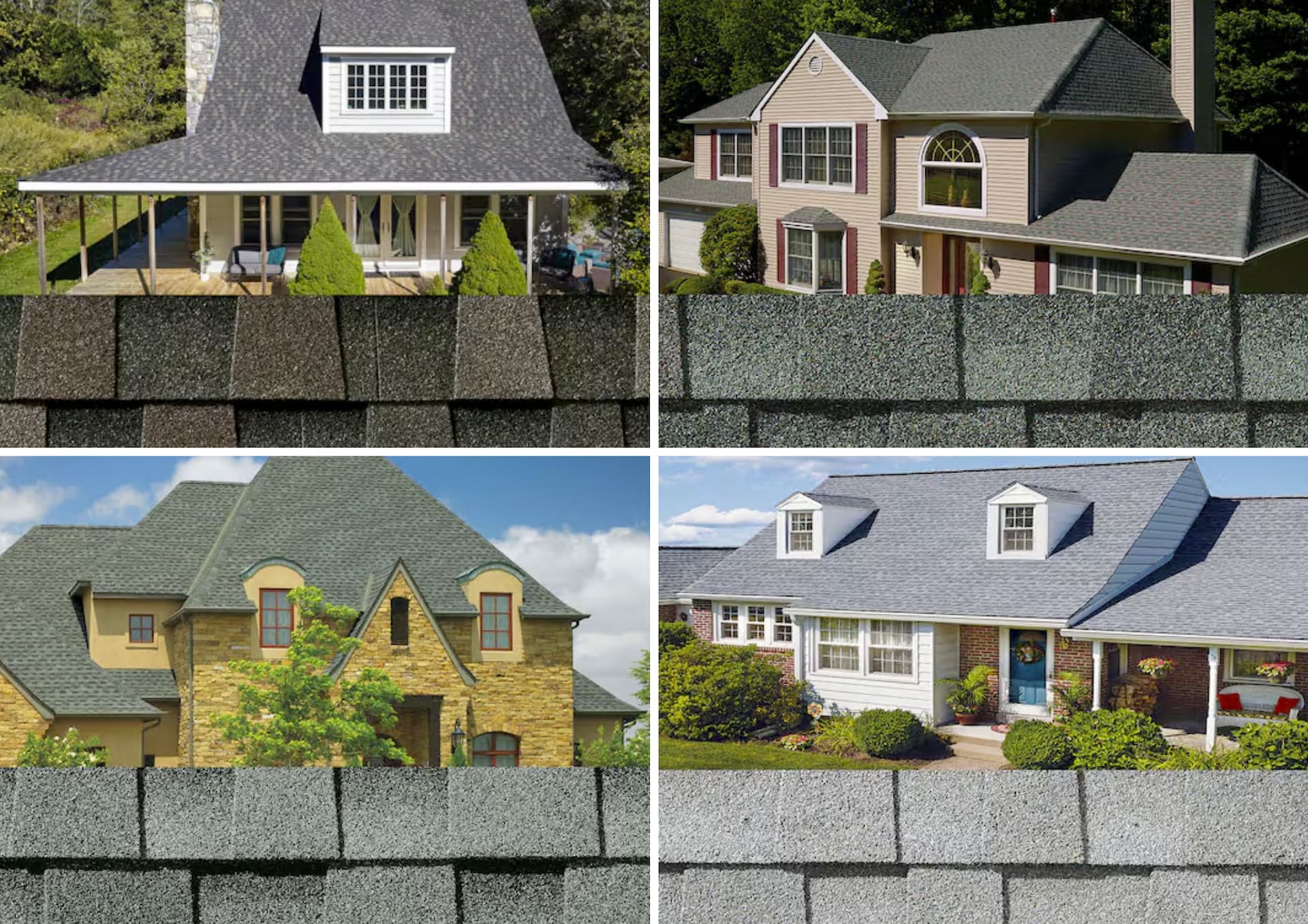
Can you guess the best shingle color for resale value?
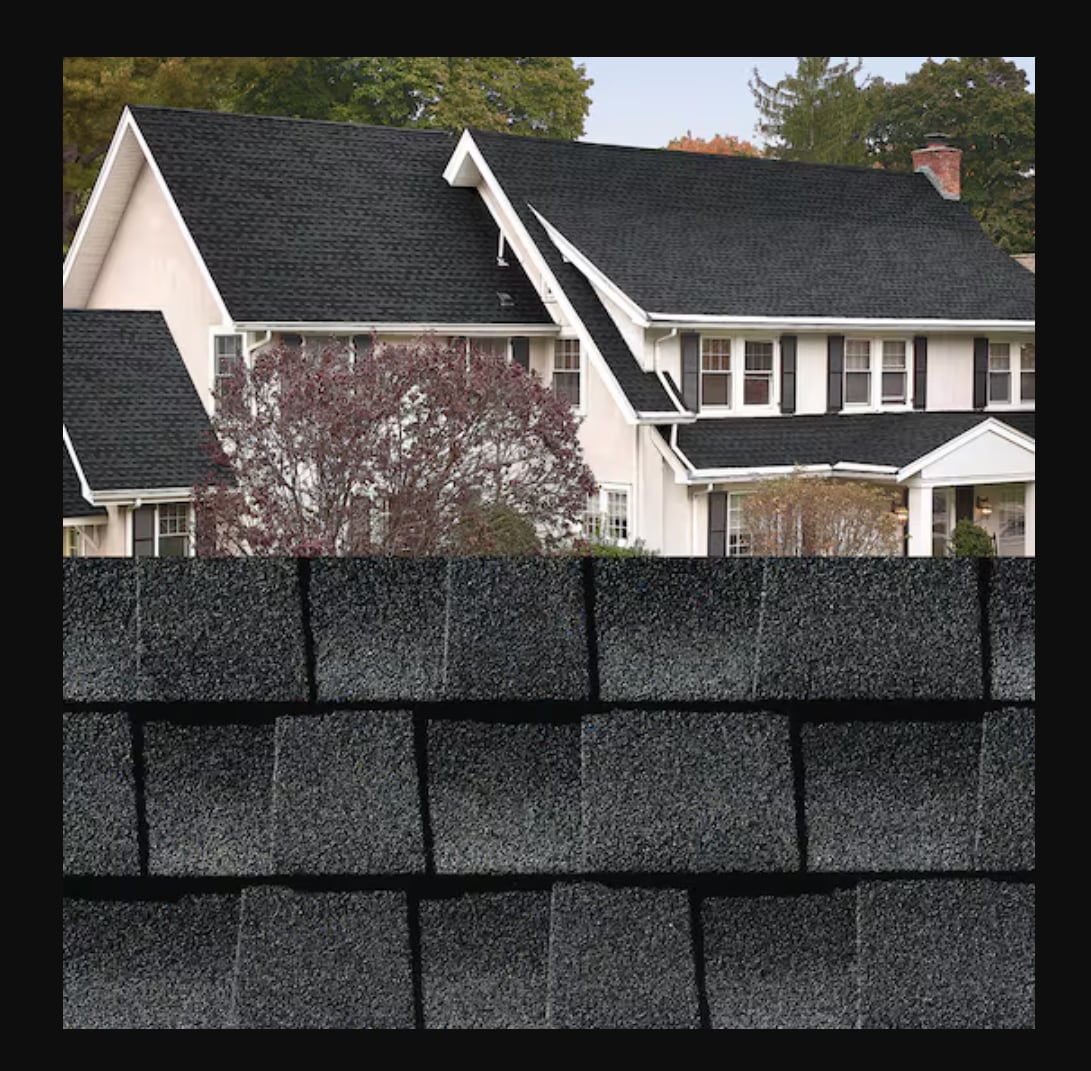
Hint: It’s not GAF Charcoal, despite the richly textured gray-black shingle color sweeping the national best-seller list year after year.
While pondering what color roof is best for resale, think back to any head-turning home properties that have made you stop and look twice. What caught your eye? A green gabled roof? Desert-minimalist landscaping? Fire-engine-red double entry doors?
Okay, hold that thought...
Choosing Right: Prominence and Permanence
If a new roof is on your horizon, you're smart to research roof colors-even if you're not selling for years to come. A quality roofing system, properly installed and maintained, can protect a home for decades. Compared with exterior paint or landscaping, shingles are a relatively permanent design choice. The roof you choose today may still be there when the kids leave for college or when a future buyer pulls up to the curb.
And visually, that permanence matters. Because the prominence of your roof is real. Up to 40% of a home's visible exterior can be the roof. If shingle color is treated like an afterthought, that's a whole lot of design real estate left undeveloped.
Ready for the pop-quiz result?
There's no universal best shingle color for resale! The reality is cooler than that. Recent real estate research suggests the bigger story is how buyers respond to a property's entire exterior.
Think of it as relational-or whole-home-curb appeal. The roof, siding, masonry, trim, doors, and landscaping are like your star basketball players, and Curb Appeal is the name of your home team. And even the strongest individual athlete can undermine a win if they refuse to be a team player. For resale, the winning roof color may simply be the one that makes the rest of the exterior look better.
Do Roofs Impact Curb Appeal and Home Value?
Real estate data already suggests that they do.
Listing Price: A 2024 Realtor.com statistical analysis found that listings mentioning a new roof were associated with a 1.1% higher listing price, or about four and a half thousand dollars on a median-priced home. That figure captures the premium associated with advertising a new roof, not the harder-to-measure value of simply having a sound roof that doesn't invite a discount.
Realtor Recommendations: The National Association of Realtors, America's largest trade association, offers another piece of evidence. In its 2025 Remodeling Impact Report, 37% of Realtors recommended sellers install new roofing before listing their homes, while 43% reported increased buyer demand for new roofing.
Selling Price: And, in a street-view study the curb appeal connection gets even more interesting. Researchers from the University of Texas at Arlington and the University of Alabama used Google Street View images, deep learning, and home sale data to quantify curb appeal. The results found that a home's curb appeal, combined with the property across the street, could account for up to 7% of its sale price.
None of that proves that installing a specific color roof will raise your sale price. But one newer study makes a very compelling look at what can happen when buyers see exterior colors in relationship to one another.
The Zillow Study: The Best Shingle Color
In 2026, Zillow surveyed more than 2,000 recent home buyers and home shoppers. They showed them homes with different exterior treatments-siding, paint, roof, etc.-paired with randomly assigned front-door colors. Participants rated their interest in the home based on exterior appearance, likelihood of scheduling a walk-through, and what they'd be willing to offer.
The results were much more interesting than 'blue is best,' or 'red is no longer hot.' Instead, it became clear that 'blue is the best,' only was true when the curb appeal (team work) was strong.
For example, on a solid-white home, a light-blue door was associated with offers $5,023 higher. Against light brick, however, a red door reduced estimated offers by as much as $6,738. On a dark red-brick exterior, charcoal gray earned the strongest demand score and an estimated $3,753 premium.
Zillow's outcomes reveal how curb appeal is fundamentally relational. There isn't one universally right color-it depends on the whole team performing together
So, What Color Roof is Best for Resale?
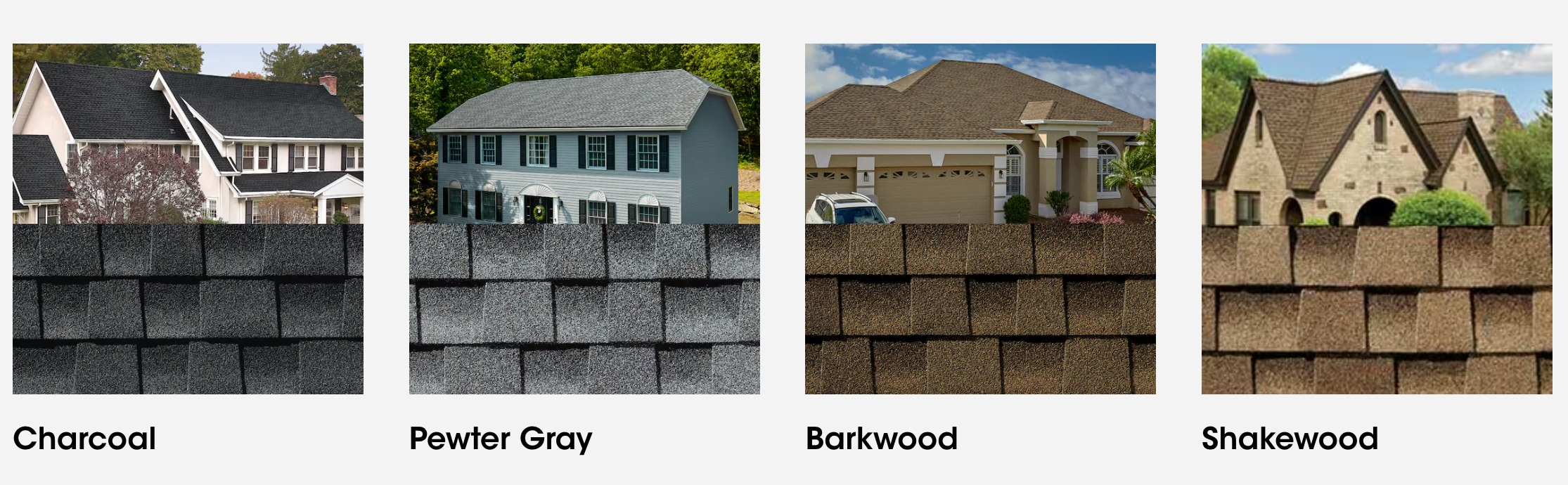
Since there is no single magic color, here's the anticlimactic answer: the best roof color for resale is the one that fits your house. That doesn't make nationally popular neutrals like Charcoal, Weathered Wood, or Pewter Gray any less relevant. Their strength is versatility, as the GAF 2026 shingle color trend guide highlighted. But versatile isn't the same as universally best.
The resale question to ask then, is which roof color makes this siding, this trim, this masonry, and this setting look stronger? Try these steps:
1. Work With What You Got
Before shingle shopping, start with your fixed elements. Brick, stone, masonry, hardscaping, and other exterior elements you're not as likely to paint or replace. Do those fixed materials lean warm, cool, or neutral? What about the secondary tones in masonry and mortar? Then choose a roof color that either echoes those tones or creates elegant contrast.
Multidimensional (but neutral) shingle colors are a good option when the exterior already contains several colors. Weathered Wood mixes rich, neutral tones. Warmer blends such as Barkwood, Shakewood, Hickory, and Sierra Sand may be a good fit when earthy masonry or natural materials are more prevalent in your fixed elements. So, remember that neutral isn't necessarily synonymous with gray.
2. Intentionally Choose Contrast or Cohesion
Contrast is not bad for curb appeal. Visual harmony doesn't mean matching everything-it means making the relationship look intentional. A texturally rich Charcoal roof can provide a strong architectural frame against light siding. For a subtler variation of this same style, lighter grays like Slate or Oyster Gray may work. Weathered Wood can bridge warmer and cooler materials, while warm brown shades naturally play well with earthier palettes.
3. Avoid Visual Friction
Visual friction occurs when colors play as competing halves instead of one palette. Your eye can't decide what to follow. Just remember, a predominantly warm exterior doesn't automatically rule out a cooler roof-and vice versa. The test is whether the roof looks like an intentional element in the greater exterior whole.
For example, an assertive shingle color like Patriot Red can be wonderful when the exterior gives it room to shine, but on a home already layered with varied masonry, siding, trim, and texture it may just look messy. When it comes to colors like Patriot Red, success comes from deciding which element gets to lead and which ones support it.
4. Use the Roofline to Add Dimension
Color isn't your only design tool on the roof. Hips and ridges trace the architecture itself, and defining their shape and proportion can be a way to add more visual definition without burdening a busy exterior palette.
Ridge cap shingles* are the perfect finishing touch to bring subtle definition and high-impact design to a roofline. By adding profile and dimension along the hips and ridges, specialized ridge cap shingles like GAF Timbertex®, Seal-A-Ridge®, Z® Ridge, or Timbercrest® create refined architectural lines that elevate the entire home's curb appeal. They introduce depth and visual interest right where a flat shingle might fall short, cleanly framing the house while seamlessly complementing the underlying shingle color palette.
Test the Palette Together Before a Full Commit
Please don't choose a roof color from a two-inch swatch-or trust that perfection on a phone screen will behave exactly the same across your entire roof. Before a full commit, give the whole line-up one last whole-home check.
1. Audit Your Exterior Undertones
Walk the exterior and identify the materials that aren't going anywhere, including: brick, stone, hardscaping, chimney masonry, and other fixed finishes. Are the dominant and secondary undertones of these materials warm, cool, or neutral? Keep it all cohesive to help narrow your roof-color selection before paint, trim, or other easier-to-change elements do.
2. Start With Versatile Foundation Shades
For resale flexibility, nationally popular neutrals such as GAF Charcoal, Weathered Wood, and Pewter Gray are useful starting points because they do work across a wide range of exterior palettes. But, the goal isn’t to automatically choose the most popular color. The goal is to use versatile shades as a foundation for roof color selection, then decide which one actually makes your house look strongest.
3. Test the Relationship Before You Install
First: Use the GAF Virtual Home Remodeler to see potential shingle colors against the house as a whole—not in isolation. Then take the decision offline.
Second: Ask your GAF-Certified Contractor for physical sample boards and view your finalists against the siding, masonry, trim, and fixed materials in natural daylight at different times of day
Build a Roof That Builds Your Home Aesthetic
A new roof already does important work protecting your home. Choosing its color in relationship to the rest of the exterior lets your investment passively work even harder. By helping the entire property feel intentional, cohesive, and cared for from the curb.
Ready to invest in the big picture of your home?
Start experimenting with the GAF Virtual Home Remodeler. Then, bring your favorite options into the real world with sample boards provided by your local GAF-Certified Contractor. When you’re ready to turn that palette into a roofing system, you can team up with your roofing team to finalize and install a roof that works beautifully with your house around it.
*Note: Specific ridge cap availability varies by region (for example, Timbercrest® is specific to the West Coast, while Z® Ridge is available in the Southwest and West). Consult with your local GAF-Certified Contractor to confirm which ridge cap options are offered in your area.
